

Iran Polypropylene Exports Buyer Guide to Grades Quality and Reliable Sourcing
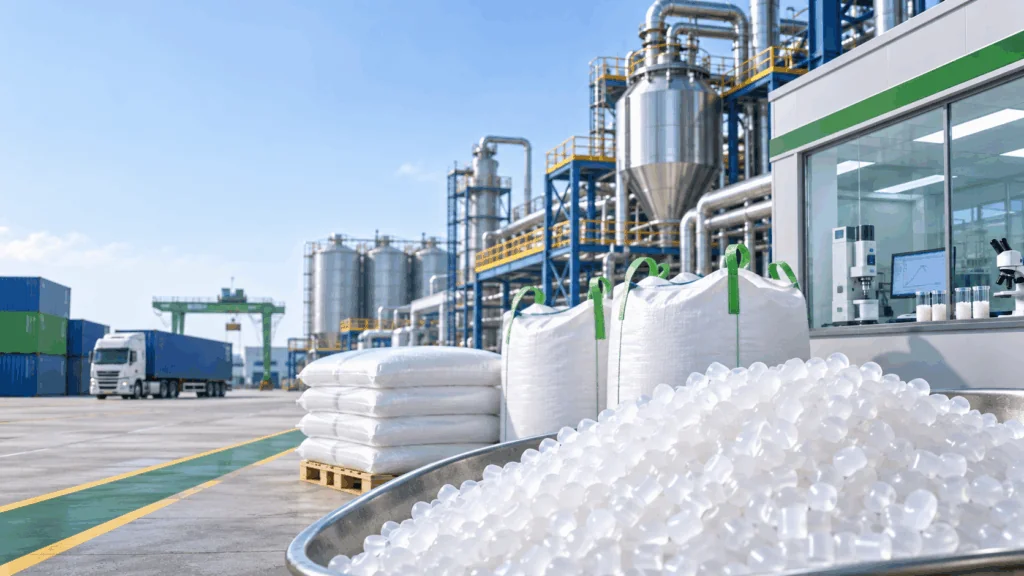
Iran Polypropylene Exports Buyer Guide to Grades Quality and Reliable Sourcing
A buyer focused approach
Polypropylene is often sold as if it were a simple commodity: name the quantity, ask for a price and choose the lowest offer. That is how expensive mistakes begin. A raffia grade that runs smoothly on a woven-sack line may be wrong for a transparent food container, while a high-flow injection grade may fill a complex mould but fail its impact requirement.
For an international buyer, the right starting question is therefore not simply, “What is your polypropylene price?” It is, “Which grade will perform reliably in my process, and can the supplier prove it?”
This guide covers PP families, export applications, HS codes, quality documents, recent trade statistics and practical sourcing for converters, distributors and importers considering Iran.
Why polypropylene remains essential to international trade
Polypropylene, usually shortened to PP, is a lightweight thermoplastic produced from propylene. It combines relatively low density with chemical resistance, stiffness, fatigue resistance and efficient processing. That balance explains why it appears in woven bags, household goods, automotive components, food packaging, fibres, nonwovens, medical disposables, caps, pipes and industrial parts.
Its value comes from versatility. Producers adjust polymer structure, molecular-weight distribution and additives for very different conversion processes. This is why “PP granules” is not a purchasing specification. You are buying controlled behaviour inside an extrusion line, loom, film line, thermoformer or moulding machine.
The global market is competitive. In 2024, the largest reported exporters of HS 390210 included Saudi Arabia at US$4.671 billion, China at US$2.295 billion and the Republic of Korea at US$2.119 billion.[1] Iran should be evaluated on grade, landed cost, logistics, documentation and continuity, not headline price alone.
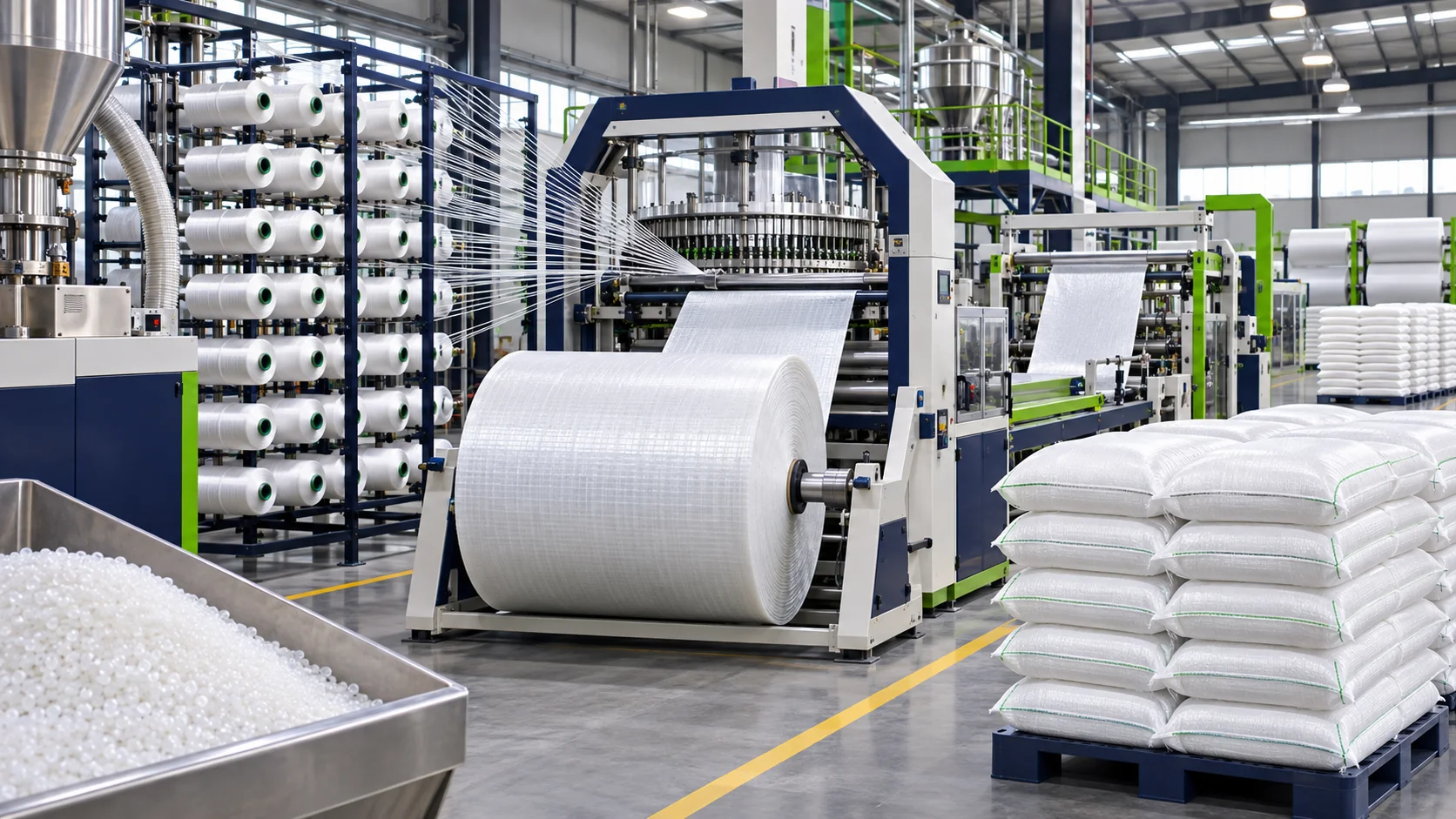
Start with the polypropylene family not the supplier name
The main commercial families have distinct performance profiles. The descriptions below are a selection guide, not a substitute for the producer’s current technical data sheet.
| PP family | Typical strengths | Common export applications | Questions a buyer should ask |
| Homopolymer PP also called PP H | High stiffness good heat resistance efficient processing | Raffia tapes woven sacks fibres injection moulded housewares caps sheets and BOPP film | What is the MFR at 230 degrees Celsius and 2.16 kg What stiffness and impact balance is guaranteed |
| Random copolymer PP often called PP R | Better clarity improved flexibility and lower sealing temperature than many homopolymers | Clear containers medical and laboratory items transparent housewares hot and cold water pipe grades | Is the material nucleated or clarified What haze impact and food contact evidence is available |
| Impact or block copolymer PP often called PP B or HECO | Stronger low temperature impact performance with useful stiffness | Automotive parts crates luggage appliances battery cases and durable injection mouldings | At what temperature was impact tested Is the quoted value notched or unnotched |
| Specialty and compounded PP | Tailored properties through fillers fibres elastomers colour or stabilisers | Mineral filled parts glass reinforced components flame retardant products UV resistant outdoor parts | What is the exact formulation tolerance and regulatory status Are recycled or off grade materials excluded |
Within each family, the process grade matters. Raffia grades need stable tape extrusion and drawability; fibre and nonwoven grades depend on flow, cleanliness and odour; injection grades balance filling, cycle time and toughness; and film grades may need controlled haze, gloss, sealing, slip and antiblock. Thermoforming requires suitable stiffness and melt strength. Pipe is especially application-specific: never treat a generic random copolymer as a certified pressure-pipe grade without the qualifications and long-term performance evidence required by the destination market.
Polypropylene HS codes for import and export
The World Customs Organization’s HS 2022 nomenclature places these materials under heading 3902 for polymers of propylene or other olefins in primary forms.[2]
| HS code | International description | Practical note |
| 390210 | Polypropylene in primary forms | Common starting code for PP homopolymer in pellets granules powder or other qualifying primary forms |
| 390230 | Propylene copolymers in primary forms | Often relevant to random and impact copolymers subject to composition and local classification rules |
| 390290 | Other polymers of propylene or other olefins in primary forms | May apply to certain materials not described by the preceding subheadings |
Finished sacks, film, sheets, pipes, fibres and mouldings are classified elsewhere. Importing countries also add national tariff digits and measures to the international six-digit code. Confirm classification before fixing duty, documentation or origin assumptions in a contract.
What the latest available Iran trade data really says
Iran’s broader polymer base is substantial. In the official 2025 Iran Plast publication, the head of Iran’s National Petrochemical Company reported actual polymer production of 6.96 million tonnes in the Iranian year 1403, broadly March 2024 to March 2025, against nominal capacity of 9 million tonnes. The same publication referred to 26 polymer projects under development and a projected capacity of 16 million tonnes by 1407, or 2028 to 2029.[3]
Product-level customs data needs more careful reading. According to WITS data sourced from UN Comtrade, Iran reported the following trade in 2023:
| Trade flow and product | 2023 value | 2023 quantity | Main reported partners |
| Exports HS 390210 polypropylene | US$7.168 million | 7,022.32 tonnes | Uzbekistan Afghanistan Turkmenistan Azerbaijan and Tajikistan |
| Imports HS 390210 polypropylene | US$39.218 million | 26,273.10 tonnes | China Türkiye United Arab Emirates Germany and Republic of Korea |
| Exports HS 390230 propylene copolymers | US$0.651 million | 638.36 tonnes | Afghanistan Türkiye Uzbekistan Armenia and Tajikistan |
| Imports HS 390230 propylene copolymers | US$15.872 million | 7,449.61 tonnes | United Arab Emirates Türkiye China Republic of Korea and Germany |
For Iran’s reported HS 390210 exports, Uzbekistan accounted for US$2.500 million and 2,532.35 tonnes; Afghanistan for US$1.849 million and 1,838.40 tonnes; Turkmenistan for US$0.764 million and 731.90 tonnes; Azerbaijan for US$0.756 million and 681.94 tonnes; and Tajikistan for US$0.433 million and 411.63 tonnes.[4] The import flows are not contradictory: Iran can export available commodity grades while importing copolymers, compounds or specialised grades needed in another specification or delivery window.[5][6]
Partner-reported or mirror statistics can differ sharply from Iran’s declarations because of timing, routing, valuation, classification and coverage. For 2024, importing countries reported HS 390210 purchases from Iran led by Iraq at US$23.454 million and 16,730.20 tonnes, followed by Uzbekistan at US$0.820 million and 1,633.28 tonnes, Türkiye at US$0.576 million and 572.85 tonnes, Armenia at US$0.243 million and 170.74 tonnes, and Georgia at US$0.194 million and 300.31 tonnes.[7] Do not add these figures to Iran-reported data as if they were one reconciled series.
The useful conclusion is simple: trade is real and regional routes matter, but public statistics are a market map, not a live inventory report.
Build an RFQ that suppliers can answer accurately
If you send only “Need 500 tonnes PP, best price,” you will receive offers that are difficult to compare. A professional request for quotation should state:
1.Finished application:woven sack, thin-wall tub, automotive part, clear container, fibre, nonwoven, film, pipe or another defined product.
2.Conversion process:injection moulding, raffia extrusion, cast film, BOPP, spunbond, meltblown, thermoforming or extrusion.
3.Preferred grade family: homopolymer, random copolymer, impact copolymer or compound.
4.Critical specification:MFR with test condition, tensile or flexural requirement, impact method and temperature, haze or clarity, shrinkage, filler or ash limit and colour.
5.Regulatory use: food contact, medical, potable water, automotive or general industrial use.
6.Additives: antistatic, slip, antiblock, UV stabiliser, nucleating or clarifying agent, flame retardant, colour or no intentional additives.
7.Commercial requirement:trial quantity, monthly volume, contract duration, packaging, destination, delivery window, preferred Incoterm and payment route.
8.Evidence required:current TDS, SDS, recent lot COA, origin document, compliance declaration, inspection and sample.
This creates a two-way conversation: the buyer explains the process; the supplier proposes a grade and proves why it fits. If the explanation stops at “same as requested,” run a controlled trial before committing to volume.
Quality documents and tests that protect the buyer

A technical data sheet shows typical properties; a certificate of analysis reports a specific lot. You normally need both, plus an SDS and any application-specific declaration.
Melt mass-flow rate is one of the first values buyers compare. ISO 1133-1:2022 and ASTM D1238 cover melt-flow measurement of thermoplastics.[8][9] For PP, results are commonly stated at 230 degrees Celsius under a 2.16 kg load, but the test condition must appear beside the number. Comparing values generated under different temperatures or loads is meaningless.
Depending on the application, ask for:
• tensile strength and modulus under ISO 527;
• flexural properties under ISO 178;
• Charpy impact under ISO 179-1:2026 or an agreed ASTM method;[10]
• Vicat softening temperature under ISO 306;
• density, ash or filler content, colour, yellowness, haze, gloss, moisture, odour and pellet appearance;
• lot-to-lot control limits rather than a single attractive sample result.
ISO 19069-1 provides a designation system for PP moulding and extrusion materials, while ISO 19069-2:2024 addresses specimen preparation and property determination.[10] State the test version and acceptance range; “according to international standard” is too vague for a claim.
For a new source, review documents, obtain a representative sample, run a normal production trial, test the finished item and approve the exact grade and producer. Retain a sealed reference sample where practical.
Food contact medical and regulated applications
Never accept “food grade” as a complete statement. EU Regulation No 10/2011 requires authorised substances, migration controls, testing and supply-chain documentation, including a supported Declaration of Compliance.[11] The EUR-Lex consolidated text was current to 14 July 2026 when this guide was prepared.[12]
For the United States, polypropylene used in food-contact articles may fall under 21 CFR 177.1520, subject to its specifications, permitted components and conditions of use.[13] Medical, pharmaceutical, potable-water and automotive applications have their own approvals and customer standards. A certificate that is relevant to one grade, factory or end use should not be transferred casually to another.
REACH also deserves precise wording. ECHA explains that polymers themselves are generally exempt from registration, while monomers and other substances used to manufacture the polymer may still create obligations for EU importers.[14] Confirm additives, restricted substances and importer responsibilities instead of treating “REACH compliant” as a universal one-line guarantee.
Price logistics and the real landed cost
Iranian PP pricing reflects producer allocation, grade scarcity, order size, packaging, payment, inspection, inland transport and freight. Ask for the quotation basis, validity, producer and exact grade, not only a trader’s code.
Compare offers on landed and usable cost:
Material price plus inland transport plus terminal and documentation charges plus freight plus insurance plus duty and taxes plus finance and compliance cost plus expected processing loss.
A resin that costs less per tonne can become more expensive if it causes web breaks, inconsistent mould filling, odour, high scrap or long machine adjustments.
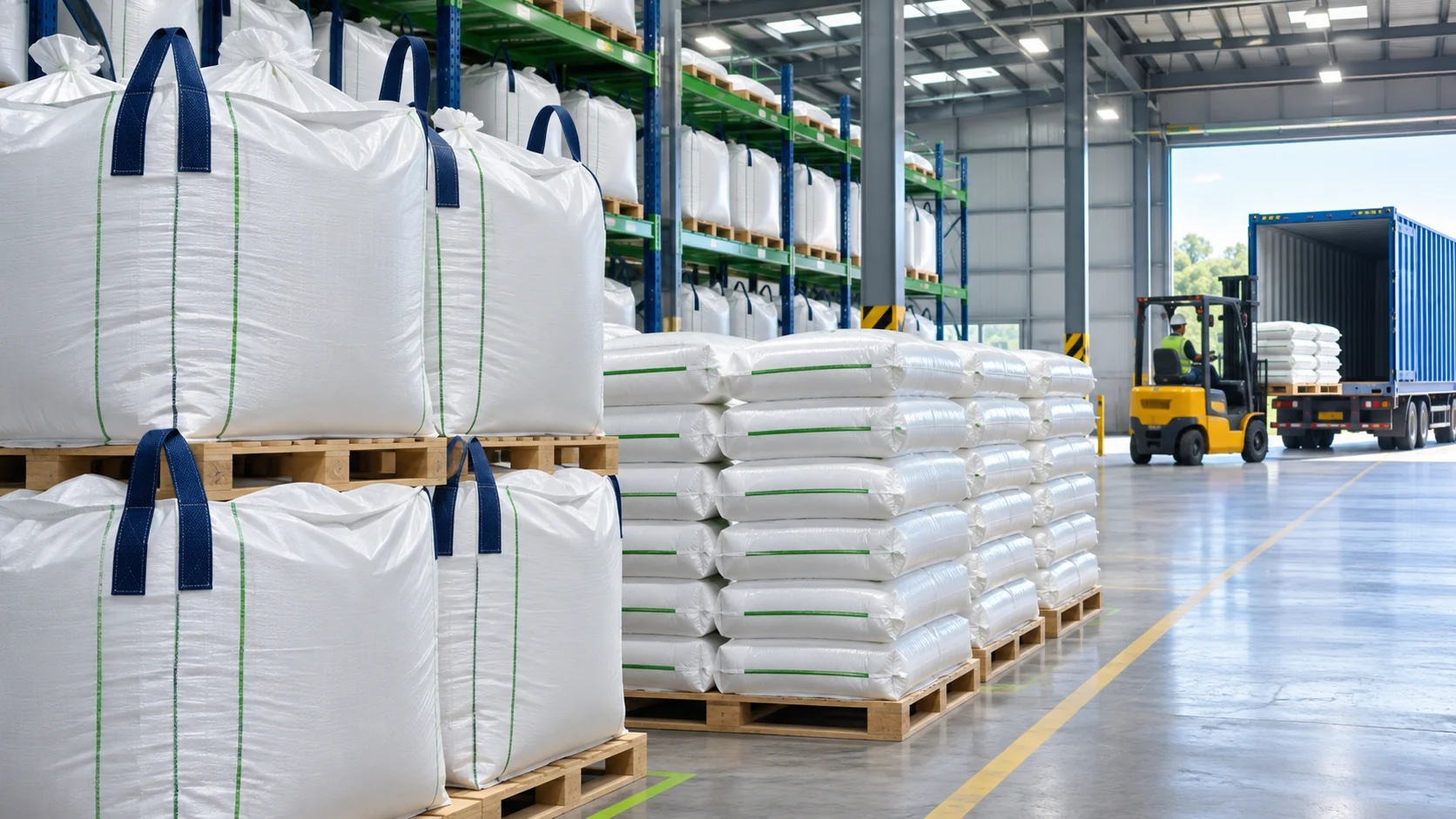
Agree bag or bulk format, net weight, palletisation, loading, moisture protection, markings and seal control. Documents commonly include the invoice, packing list, transport document, origin certificate, COA, SDS and required inspection or regulatory evidence.
Pellet containment is now part of responsible trade. IMO recommendations call for strong packaging, container identification and appropriate stowage; in April 2026, IMO agreed to develop a mandatory maritime code.[15] EU Regulation 2025/2365 on pellet loss is in force with phased obligations.[16] Ask how the supplier, loader and carrier prevent spills.
Compliance and supply continuity in 2026
Trade with Iran requires lawful screening of counterparties, banks, vessels, insurers, end users and goods under every jurisdiction involved. Neither a low price nor a third-country route removes sanctions or export-control obligations. Use qualified legal and compliance advisers for your specific transaction.
Domestic export rules can also change. Iran imposed emergency restrictions on chemical, polymer and petrochemical exports in April 2026. The Trade Promotion Organization later instructed customs to lift the restriction after the legal period expired; the lifting was reported effective 12 July 2026 under reference 8105594, subject to the normal applicable rules.[17] That sequence is a reminder to verify the current status immediately before contracting and again before shipment.
Build continuity into the purchase plan: approve an alternative grade where possible, define what counts as an acceptable substitution, set a shipment window, agree the response to regulatory delay and avoid making production depend on an untested lot.
How to verify an Iranian polypropylene offer
Before paying a new counterparty, confirm the company’s legal identity, authority to sell the named producer’s material, export eligibility, bank details and physical business presence. Match the pro forma invoice to the contract, packing, grade, producer, quantity and Incoterm. Request recent lot evidence and use independent inspection where the risk justifies it.
Watch for familiar warning signs: a price far below the market without a credible explanation, pressure to pay a different entity, refusal to identify the manufacturer, reused COAs, inconsistent grade codes, missing lot numbers, or a last-minute substitution described as “equivalent.” Equivalent for whom, under which test, and in which end product? Those questions should be answered before the container moves.
Looking for Iranian Polypropylene manufacturers? Get access to manufacturer contacts and business opportunities through Ixport’s NEXUS B2B Directory.
Turning market information into a workable Iran sourcing plan
IXPORT’s role is to make the distance between information and action smaller. A buyer can use the Customer Directory to identify and research companies in the Chemical Plastic Polymer and Rubber Industries category, while the Iran Gateway supports foreign companies that need a local market presence, supplier connections, market guidance and related commercial services.[18][19]
The starting point can be simple. Send IXPORT your end product, process, target MFR, critical test values, monthly volume, destination and preferred delivery term. With a clear brief, the discussion can move from a generic list of sellers to a shortlist that can be checked for capability, documentation and commercial fit.
Iranian polypropylene may offer a useful regional sourcing option, but the strongest purchase is not the one with the boldest discount. It is the one in which the grade works on your line, the documents match the lot, the route is compliant, and both sides understand what happens after the first shipment.
Explore Iranian Polypropylene manufacturers and business contact details in one practical Excel directory.
Sources
1. World Bank WITS using UN Comtrade data, global exports of HS 390210 in 2024
2. World Customs Organization, HS Nomenclature 2022, Section VII
3. Iran Plast 2025 official publication, National Petrochemical Company message
4. World Bank WITS using UN Comtrade data, Iran exports of HS 390210 in 2023
5. World Bank WITS using UN Comtrade data, Iran imports of HS 390210 in 2023
6. World Bank WITS using UN Comtrade data, Iran trade in HS 390230 in 2023
7. World Bank WITS using UN Comtrade mirror data, imports of HS 390210 from Iran in 2024
8. ISO 1133-1:2022, melt mass-flow and melt volume-flow rates
9. ASTM D1238-26, melt flow rates of thermoplastics
10. ISO 19069 polypropylene moulding and extrusion materials and ISO 179-1:2026 Charpy impact testing
11. European Commission, legislation for plastic food-contact materials
12. EUR-Lex, Regulation EU No 10/2011 consolidated to 14 July 2026
13. United States FDA inventory and 21 CFR 177.1520 for polypropylene
14. European Chemicals Agency, REACH registration obligations for polymers
15. International Maritime Organization, plastic pellet transport recommendations and 2026 code development
16. EUR-Lex, Regulation EU 2025/2365 on preventing plastic pellet losses
17. Iran export restriction update, reference 8105594 effective 12 July 2026
18. IXPORT NEXUS B2B
19. IXPORT Iran Gateway
Comments