

Buying Rebar from Iran for Projects That Demand More
Buying Rebar from Iran for Projects That Demand More
A rebar shipment earns its value when it is accepted, fabricated and placed on schedule. For a construction contractor, steel importer or reinforcement processor, that makes the purchasing decision more demanding than comparing prices per tonne. The bars must satisfy the project specification, arrive in a usable size mix and remain traceable through cutting and bending.
Iran deserves a place in that sourcing conversation. Its recorded exports show substantial trade in reinforcing bars, while its imports demonstrate that domestic production does not eliminate every purchasing requirement. The opportunity is to identify a technically suitable, commercially workable transaction. This guide connects Iran rebar exports with the decisions that matter at your warehouse, fabrication shop and construction site.
Understand exactly which reinforcement you need
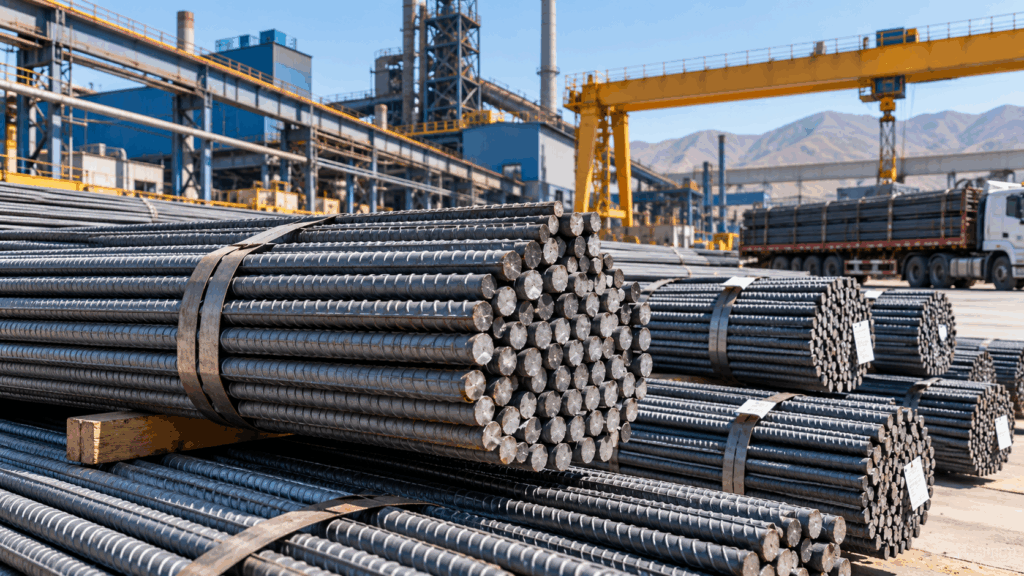
Rebar is steel reinforcement used within concrete. Ribbed, or deformed, bars provide a surface profile that helps transfer forces between steel and concrete. Plain bars belong to the product family too, but their intended use must follow the engineering specification. A smooth bar should never be substituted for a specified deformed bar simply because the diameter matches. [1]
Buyers should distinguish the material, surface treatment and delivery form. These describe different aspects of the same order.
| Product family | Purchasing focus |
| Uncoated carbon steel rebar | Required strength, ductility, dimensions and project approval |
| Low alloy reinforcement with controlled properties | Chemistry, tensile behaviour and any welding requirements |
| Epoxy coated rebar | Base bar compliance, coating specification and handling protection |
| Galvanized rebar | Applicable zinc coating specification and fabrication requirements |
| Stainless steel rebar | Specified stainless grade, exposure conditions and traceability |
Corrosion resistant reinforcement can be relevant to coastal structures, bridges and other demanding environments. Select it through the project’s durability design, considering protection, availability and cost. Its inclusion here describes the international product range; it does not establish availability from a particular Iranian mill. [2]
Straight bars suit stockholding and conventional cutting operations. Reinforcement supplied in coils can support automated processing, provided the equipment and approval scope cover the material. Cut and bent bars, stirrups and assembled cages add fabrication services to the steel purchase. Welded reinforcement mesh is a related product with its own specification and should have a separate inquiry.
Read Iran rebar trade figures by product and period
The Iranian Steel Producers Association’s figures, published by Chilan on 14 February 2026, separate straight rebar from the category labelled coiled rebar. The comparison covers the first ten months of Iranian years 1403 and 1404, with the latter approximately March 2025 to January 2026. [3]
| Export measure | Ten months of 1403 | Ten months of 1404 |
| Straight rebar volume | 1,939,000 tonnes | 1,615,000 tonnes |
| Straight rebar value | US$925 million | US$701 million |
| Coiled rebar category volume | 435,000 tonnes | 486,000 tonnes |
| Coiled rebar category value | US$216 million | US$223 million |
The source reports straight rebar export volume falling 17%, while the coiled category increased 12%. Values are rounded in the original table. These contrasting movements are a reason to investigate your product segment instead of treating all long steel exports as one market. The coiled category should not be assumed to consist entirely of the ribbed reinforcement required by your project. [3]
A separate eight-month 1404 import report records 14,000 tonnes of rebar worth US$22 million. Its reporting period is shorter and its rebar category is not split in the same way, so it cannot support a direct trade balance against the export table. These are historical trade figures, not current offers or evidence that a particular grade is available today. [4]
For a foreign supplier considering Iran, the import total suggests an existing market to investigate. It does not identify a shortage, the imported grades or the customers responsible. Those questions require product-level research.
Match the standard before comparing the grade
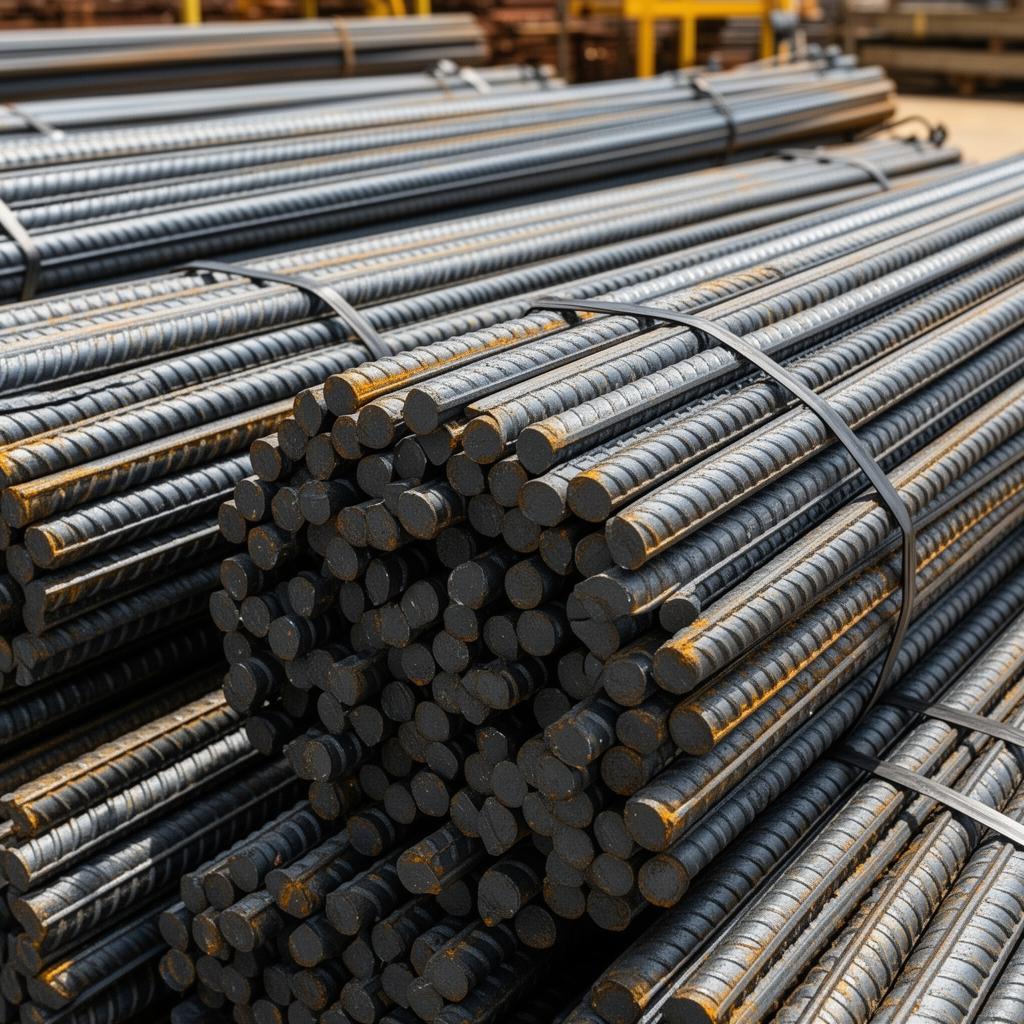
“High strength rebar” is too broad for an international purchase order. Specify the governing standard, edition, grade and project acceptance requirements. Then ask each supplier to respond against that exact description.
ASTM A615/A615M-26 covers carbon steel reinforcing bars. Its scope lists Grade 40 [280], Grade 60 [420], Grade 80 [550] and Grade 100 [690], with the bracketed values representing specified minimum yield strength in MPa. ASTM A706/A706M-26 addresses low alloy reinforcement with controlled tensile properties and chemistry intended to enhance weldability. The two specifications are not interchangeable purchasing labels. [1, 5]
Under the BS 4449 framework described by The Concrete Centre, B500A, B500B and B500C share a characteristic yield strength of 500 MPa, but have different ductility requirements. B500B and B500C therefore cannot be treated as identical because “500” appears in both names. [6]
Likewise, a domestic grade description on an Iranian quotation needs a documented comparison with the destination specification. Ask for the applicable Iranian standard and edition, the producer’s declared grade and test evidence. Any proposed substitution belongs with the responsible engineer or approving authority before purchase.
Which requirement is decisive on your project: certification, seismic detailing, welding, corrosion protection or availability of specific diameters? Answering that question early makes supplier discussions much more productive.
Examine ductility and welding requirements
Yield strength indicates when permanent deformation begins; it does not describe the whole tensile response. The relevant standard may also control tensile strength, elongation and the relationship between tensile and yield strengths. Seismic applications can impose additional material and detailing requirements. Have the project engineer define the acceptance criteria rather than relying on a seller’s general “earthquake resistant” description.
Welding deserves explicit treatment. ASTM A706 limits chemistry and carbon equivalent to improve weldability, but welding still requires a suitable procedure. ASTM A615 does not include equivalent provisions to enhance weldability and calls for caution. Obtain the heat chemistry and the required welding procedure when welded connections are planned. A grade name alone is insufficient. [1, 5]
For coiled reinforcement, ask what happens after straightening. CARES notes that decoiling can alter mechanical and geometrical properties. Where required, test the processed material and verify the fabricator’s controls, rather than relying only on a mill certificate issued before processing. [7]
Turn diameters and lengths into a usable order
An attractive total tonnage can hide an unsuitable diameter mix. Build the order around your bar schedule or expected stock turnover, showing tonnes by nominal size, delivery length and grade. Confirm length tolerances, bundle weights and whether partial bundles are acceptable.
For preliminary planning, theoretical mass in kilograms per metre is approximately 0.006165 multiplied by the square of nominal diameter in millimetres, using an assumed steel density of 7,850 kg/m³.
| Nominal diameter | Approximate mass per metre | Approximate mass of a 12 metre bar |
| 12 mm | 0.888 kg | 10.65 kg |
| 16 mm | 1.578 kg | 18.94 kg |
| 20 mm | 2.466 kg | 29.59 kg |
| 25 mm | 3.853 kg | 46.24 kg |
These calculated examples help estimate handling loads and bar counts. Use the applicable standard’s nominal mass and permitted deviations for acceptance, and agree whether invoicing uses actual weighed mass or a defined theoretical basis. Measure ribbed bars using the specified method; an outside measurement across ribs is not the nominal diameter.
Keep quality evidence connected to the shipment
Request representative test documentation while qualifying the supplier, followed by certificates for the actual supplied heats. The inspection plan should identify required chemistry, tensile and bend testing, dimensional checks and any additional project tests. Agree sampling, laboratory acceptance and the procedure for disputed results before production.
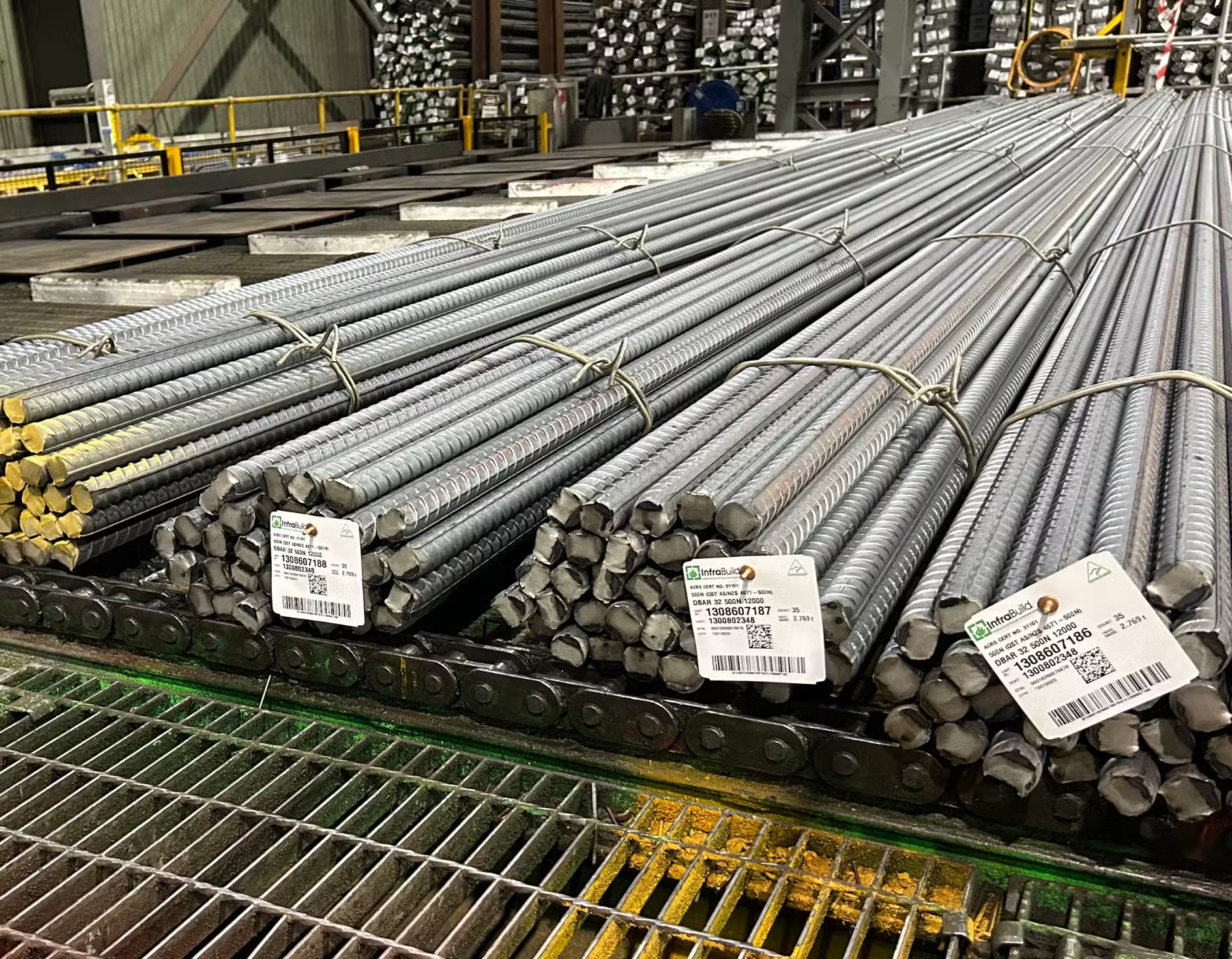
Check how rolled markings, bundle labels, heat numbers and packing records connect. CRSI’s guidance illustrates the role of bar identification and bundle tags in identifying reinforcement. [8] Your receiving team should be able to reconcile the physical delivery with its documentation even when one order contains several heats or diameters.
If independent inspection is required, define its scope and timing. Photographs may show packaging condition, but they cannot establish tensile properties. Similarly, a quality management certificate should not be treated as proof of product approval for every grade or diameter.
For fabricated reinforcement, agree drawing revisions, shape schedules, dimensional tolerances and identification of finished bundles. Confirm who authorizes changes. A correctly certified bar bent to an obsolete drawing can still delay installation.
Compare rebar prices on the same delivery basis

Useful comparisons of Iran rebar prices start with equivalent specifications and quantities. Request separate disclosure of diameter extras, coating or fabrication charges, inspection, inland transport and export handling. Add freight, insurance where required, destination charges, applicable duties and local delivery to estimate landed cost.
Specify the named delivery point and agreed Incoterms edition. Allocate loading, unloading, customs tasks and insurance clearly, and keep payment terms separate from the delivery rule. Quote validity matters when the delivery programme extends across several production runs.
Discuss cutting yield with your fabricator. A different approved delivery length may reduce offcuts, while a mixed load may improve inventory availability. Evaluate those benefits against handling and transport constraints. Ask how shipment delays, missing diameters, rejected material and replacement freight will be addressed contractually.
Check transport feasibility before committing
Long bundles need a practical loading and unloading plan. Give the carrier the actual bar length, bundle dimensions and weights before choosing road transport, container equipment or a breakbulk shipment. Confirm payload limits, lifting arrangements, lashing and receiving access for the proposed route.
Specify protection appropriate to the product and journey. Coated reinforcement needs handling that preserves the coating, together with an agreed inspection and repair procedure. Keep grade and heat identification legible throughout transit. At destination, record shortages or damage promptly and follow the contract’s claim procedure.
Resolve customs and transaction requirements
For qualifying non-alloy products, HS 7214.20 covers certain deformed bars outside the irregularly wound coil category; HS 7213.10 covers qualifying deformed products in such coils. Stainless and other alloy reinforcement can fall elsewhere. These are classification starting points, not universal rebar customs codes. [9]
Have a customs specialist confirm the full national tariff line, import requirements and any applicable trade remedies for the product and origin. Obtain the destination’s construction-product approvals independently of customs classification.
Trade with Iran also requires transaction-specific sanctions review. OFAC’s guidance identifies sanctions authorities concerning Iran’s iron and steel sectors, including certain significant transactions; non-US businesses can face exposure. [10] Confirm applicable restrictions, counterparties and ownership, payment arrangements, bank acceptance, insurance and transport eligibility before commitment. Check current Iranian export or import requirements as well. Technical suitability does not establish transaction clearance.
Find the right commercial conversation
A steel stockist, a rebar producer and a fabrication contractor may answer very different needs. Establish whether you need a manufacturing source, a distributor with the right inventory or a partner able to deliver scheduled reinforcement to site.
IXPORT’s NEXUS B2B provides industry-organized Iranian company information, including a steel category, to help build an initial contact list. Verify each company’s current role, product range and relevant approvals as you qualify potential partners. [11]
If you supply reinforcement or associated industrial products and want Iranian companies to understand your offering, Iran Gateway provides a Persian company presence and a route for business inquiries. Present your actual specifications and capabilities so prospective partners can assess the fit. [12]
Start with an inquiry that can be answered
Tell us your destination market, business role, required standard and grade, diameter mix, quantities, delivery form and target date. Include any mandatory certification, fabrication or coating requirements. If your project specification is still being developed, identify the unanswered question first.
Are you seeking a recurring supply programme, testing a new source or looking for buyers in Iran? Share the requirement with IXPORT. A precise starting point helps turn market interest into a useful discussion with the right businesses.
Sources and data notes
[1] ASTM International, A615/A615M-26, public scope and abstract. Read source
[2] CRSI, Corrosion Resistance Bars. Read source
[3] Iranian Steel Producers Association, ten-month 1403 and 1404 export table, published by Chilan on 14 February 2026. Original units are thousand tonnes and US$ million. Table distinguishes straight and coiled rebar categories. Read source
[4] Iranian Steel Producers Association, eight-month 1404 import table, published by Chilan on 20 December 2025. Rebar row reports 14 thousand tonnes and US$22 million. (Read source)
[5] ASTM International, A706/A706M-26, public scope and abstract. Read source
[6] The Concrete Centre, Standards for reinforcement, BS 4449 and related standards. Read source
[7] CARES, Sampling and testing decoiled reinforcement. Read source
[8] CRSI, Bar Identification and Bar Tags. Read source
[9] Australian Government DFAT, Chapter 72 tariff descriptions in the KAFTA product-specific rules schedule. Used only for product descriptions, not as evidence of preferences or market access for Iranian goods. Read source
[10] US Treasury OFAC, FAQ 666, Executive Order 13871. Read source
[11] IXPORT Nexus B2B. Read source
[12] IXPORT Iran Gateway. Read source
Comments