

Buying Steel Billets from Iran: Grades, Trade Data and the Real Cost of Supply
Buying Steel Billets from Iran: Grades, Trade Data and the Real Cost of Supply
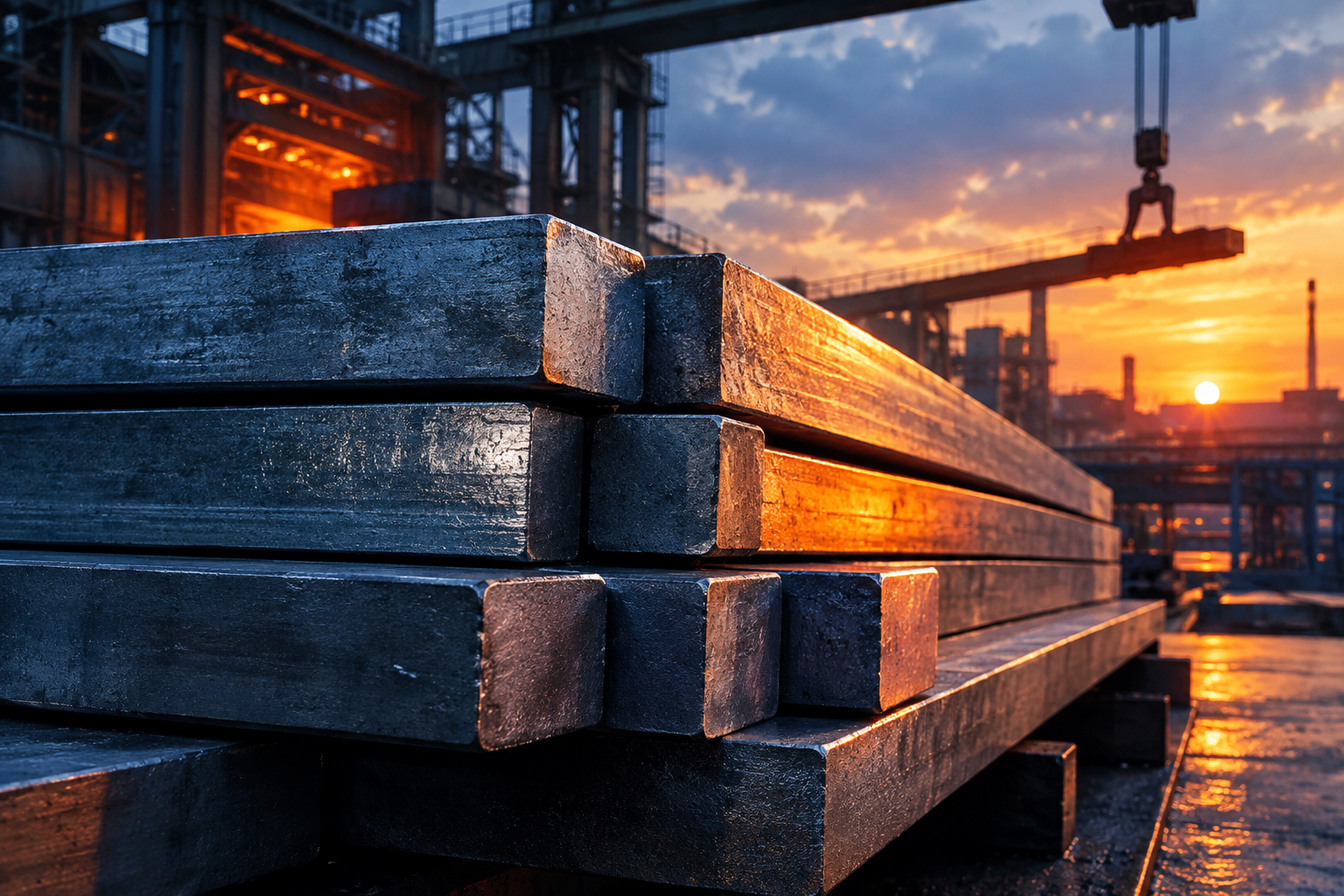
The billet you buy today becomes the bar, wire or section you sell tomorrow. A small mismatch in chemistry or dimensions can follow that material through reheating, rolling and final inspection. That makes billet purchasing a production decision as much as a trading decision.
For businesses investigating Iran steel billet exports, the opportunity starts with finding material that fits an existing mill and customer base. A successful purchase gives you predictable feedstock, a workable delivery schedule and enough margin after conversion. This guide explains what to compare, which trade figures matter and how to start a useful conversation with an Iranian counterpart.
Billet, bloom, slab or ingot: which product are you buying?
An inquiry for “steel ingots” can leave the product unclear. Specify the form and processing route, particularly when translating commercial descriptions between Persian and English.
| Product | Form and downstream use |
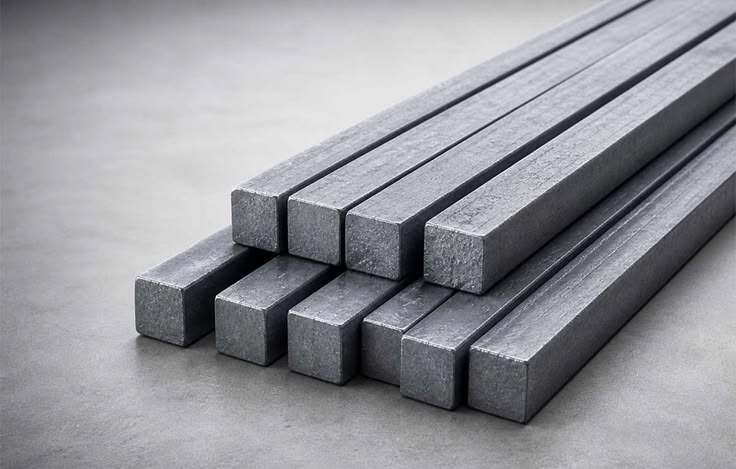
| Billet | Smaller semi-finished sections for rolling into bars, wire rod and related products |
| Bloom | Larger semi-finished sections for further rolling or forging |
| Slab | Wide rectangular feedstock for flat products such as coil and plate |
| Mould-cast ingot | Steel solidified in an individual mould for subsequent processing, including forging |
Worldsteel describes billets and slabs as semi-finished products. ASTM’s forging-stock specification also covers ingots, blooms and billets, and notes that billet/bloom terminology is not entirely uniform. Order by dimensions and applicable specification rather than assuming a universal size boundary. [1,2]
For a rebar rolling mill, square billet may be the relevant starting point. A flat-products mill needs a different feedstock geometry, while a forging business may require particular ingot or bloom characteristics. Begin with the process the material must pass through.
Iran’s billet exports: product-specific statistics
The Iranian Steel Producers Association’s table, published by Chilan on 14 February 2026, separates billet and bloom from slab. These figures cover the first ten months of Iranian year 1404, approximately March 2025–January 2026. [3]
| Export category | Volume | Value | Volume change versus corresponding prior period |
| Billet and bloom, combined | 4.925 million tonnes | US$2.026 billion | +33% |
| Slab | 1.764 million tonnes | US$704 million | +35% |
| Total semi-finished steel | 6.689 million tonnes | US$2.730 billion | +34% |
Billet and bloom are reported together: 4.925 million tonnes is not a billet-only figure. Values and growth rates follow the table’s published rounding. These are historical shipments, not available stock or current quotations.
For global context, worldsteel reports 71.2 million tonnes of ingot and semi-finished exports in calendar 2025, compared with 61.9 million in 2024. The different periods and product coverage prevent a direct Iranian market-share calculation. [4]
What about steel billet imports into Iran?
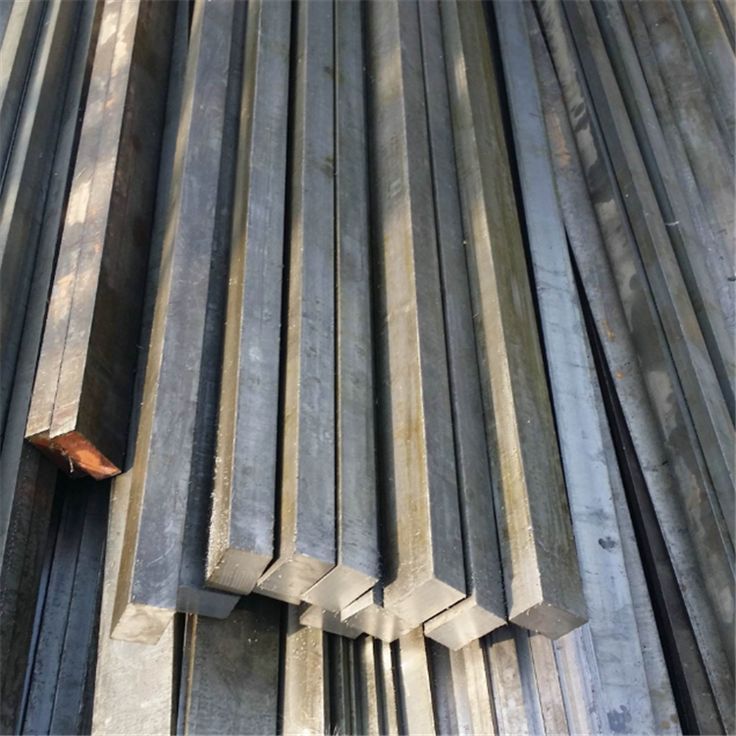
ISPA’s separate eight-month 1404 import table reports approximately 4,000 tonnes of billet and bloom, valued at US$3 million, and 210 tonnes of slab, valued at US$0.2 million. The displayed figures are rounded. [5]
This provides evidence of imports, but not proof of demand for your grade. Nor should eight-month imports be subtracted from ten-month exports to calculate a trade balance. For a foreign supplier, the useful next question is which buyer has an unmet technical or delivery requirement.
Choose the grade around your finished product
The buying brief should connect the billet to the product you intend to manufacture. Separate ordinary carbon-steel requirements from alloy, stainless and specialist forging applications.
A September 2026 manufacturer’s tender published by Chilan advertised 150 × 150 mm billets under 3SP and 5SP descriptions. It demonstrates actual market terminology, not universal availability or a recommendation of that supplier. [6]
When buying steel billets from Iran, matching the billet grade to the intended finished product is essential for consistent rolling performance and quality.
If an offer uses those labels, request the governing standard, edition and complete chemical limits. Do not assume that a commercial designation guarantees suitability for your finished rebar, wire rod or engineering product.
Ask your metallurgist to define acceptable carbon, manganese, silicon, phosphorus and sulfur ranges, together with any relevant residual-element limits. For alloy material, identify the required alloying elements and manufacturing condition. Each limit should serve the intended process or final specification.
For forging stock, ASTM A711/A711M is one relevant specification family; its scope does not make it the default standard for every rolling billet. Select the contractual specification with your technical team. [2]
Which requirement would stop your mill from accepting a heat? Put that requirement in the inquiry before discussing a discount.
Dimensions are part of the production plan
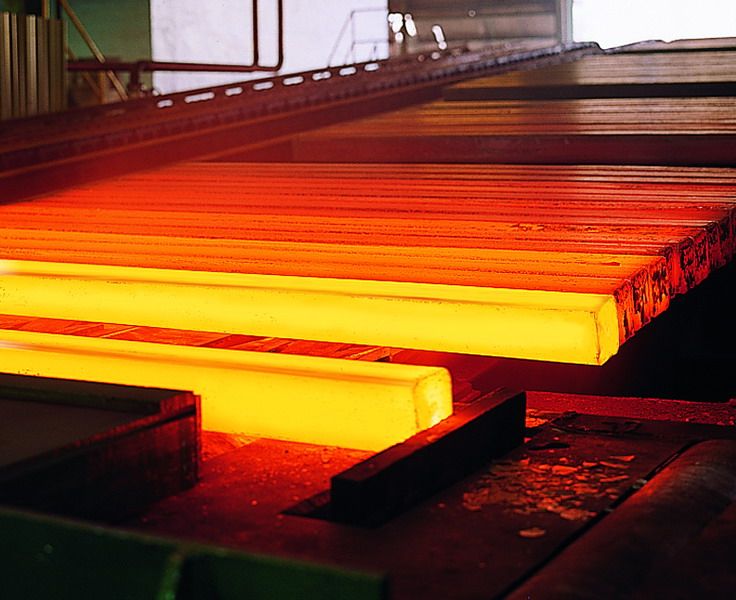
List cross-section, length, dimensional tolerances, straightness and permitted end condition. Add the acceptable piece-weight range where your handling equipment or furnace loading depends on it.
An illustrative inquiry might state “150 × 150 mm square billet, 12 m length,” followed by the agreed tolerances and chemistry. Those dimensions alone do not define a complete product or confirm a supplier’s current offering.
Clarify whether settlement will use actual weighed tonnage or another agreed basis, how weighing is performed and how discrepancies are resolved. Piece counts, shipment weights and heat records should be reconcilable. That is especially useful when one shipment contains several production heats.
For companies buying steel billets from Iran, confirming billet dimensions, tolerances, and weight requirements before ordering can help prevent production delays.
Understand what a certificate can—and cannot—show
A mill test certificate should connect the material to an identifiable producer and heat. Check the specification, chemical results, dimensions and any agreed inspection results, then match the certificate to markings and shipping records.
Chemical compliance alone does not describe every aspect of billet quality. Research on continuous casting identifies issues such as centre segregation and internal cracking. Your acceptance plan should therefore address the defects relevant to your processing route. [7]
Specify surface inspection, dimensional checks and any required internal-quality assessment with an agreed method, sampling frequency and acceptance criteria. If you require macro-etching or ultrasonic examination, have your technical team establish an appropriate procedure rather than adding a vague “quality inspection” clause.
For an unfamiliar source, consider a commercially workable trial shipment. Record the heat numbers, processing conditions, yield and finished-product results. A successful trial gives both parties a clearer basis for discussing repeat orders; one acceptable sample does not qualify unlimited future production.
Compare cost per saleable tonne
The lowest billet price does not necessarily produce the lowest finished-product cost. A practical comparison includes delivered feedstock cost and the proportion converted into saleable output.
Illustrative calculation—not a market quotation:
| Offer | Delivered billet cost per tonne | Assumed saleable yield | Feedstock cost per saleable tonne |
| A | US$440 | 94% | US$468.09 |
| B | US$448 | 97% | US$461.86 |
The real cost of buying steel billets from Iran goes beyond the quoted price per tonne and should account for delivered cost, processing yield, and material losses. The calculation is delivered cost divided by yield expressed as a decimal. Under these hypothetical assumptions, B costs US$8 more per purchased tonne but about US$6.23 less per saleable tonne. It excludes conversion energy, labour, financing and other operating costs; it is not a claim about any supplier’s performance.
Use your own trial results and operating assumptions. Include cropping, scale loss and rejected output consistently, and avoid counting the same loss twice. This turns a price discussion into a comparison your production and purchasing teams can both use.
Classify the shipment before checking tariffs
“Steel billet HS code” is a useful search phrase, but classification depends on composition and form. WCO Chapter 72 distinguishes the following headings. [8]
| Material category | HS heading |
| Iron or non-alloy steel ingots and other primary forms, subject to exclusions | 7206 |
| Semi-finished iron or non-alloy steel | 7207 |
| Stainless steel ingots, primary forms and semi-finished products | 7218 |
| Other alloy steel ingots, primary forms and semi-finished products | 7224 |
The heading is only the starting point. Have the destination customs broker confirm the full national code, duties, origin requirements and any trade remedies. A tariff applicable to one grade or country cannot be carried across to every billet transaction.
Build a delivery agreement around the actual cargo
Determine whether the offer covers existing stock or future production. For stock, request dated identification and inspection access. For future casting, agree production timing, quantity tolerance and the process for approving changes.
Discuss lifting arrangements, load limits, stowage, securing and segregation by heat with the carrier and surveyor. Your documentation should connect the commercial invoice, packing or weight list, origin evidence, transport document and inspection records to the same consignment.
State the named delivery location and Incoterms® 2020 rule. Separately agree title transfer, payment milestones and claims procedures; those contract questions need explicit treatment. Confirm carrier and insurer acceptance before presenting a route as available. [13]
Production and export conditions can change. Reuters reported a temporary Iranian slab and sheet export suspension in April 2026, illustrating why historical trade volumes cannot establish present shipment feasibility. That report was not a blanket billet-export ban and does not confirm today’s rules. [9]
Establish legal and payment feasibility early
OFAC’s guidance on Executive Order 13871 describes sanctions authorities concerning Iran’s iron and steel sectors, including certain significant product transactions and related financial activity. Non-US businesses can also face exposure. [10]
Before buying steel billets from Iran, international importers should confirm applicable trade restrictions, payment feasibility, and compliance requirements.
Obtain qualified advice on the parties, ownership, goods, end use, transport and payment arrangements under the applicable jurisdictions. Secure necessary authorizations and financial-institution acceptance before committing funds. A different payment currency or an intermediary does not, by itself, establish that a transaction is permissible.
This review belongs alongside technical qualification, before production reservations or deposits.
Make the first order useful for the second
Before a trial arrives, agree how your team will evaluate it. Keep receiving records, photographs, certificate references and production observations together so any concern can be traced to the relevant heat. Share the agreed findings with the seller, including where the material performed well.
For repeat business, document which specifications must remain fixed and which changes require approval. Discuss forecast quantities without confusing a forecast with a binding order. A clear review process helps both sides plan: the buyer understands what will arrive, while the supplier knows what evidence is needed to retain the business. Reliability becomes something you can assess across shipments.
Find the partner who fits your requirement
An overseas rolling mill usually needs an identifiable source and consistent feedstock. A foreign supplier entering Iran needs to establish which mills, forgers or distributors have a relevant requirement. Those are different searches, so explain your role when making contact. For international businesses considering buying steel billets from Iran, identifying suitable manufacturers and evaluating potential suppliers are important steps in the sourcing process.
IXPORT’s Customer Directory includes a steel category for building an initial company shortlist. Treat those records as leads to investigate: establish each company’s actual activities, purchasing role and current suitability before proposing a transaction. [11]
If you want Iranian customers to understand your offering, Iran Gateway provides a Persian-language company presence and a channel for cooperation inquiries. A useful profile could explain your product forms, documentation and technical capabilities, giving prospective customers enough detail to identify a fit. [12]
Are you sourcing billet, supplying specialist material or looking for a distribution partner? Tell IXPORT which decision you are working toward, and what information you still need.
Prepare an inquiry that gets a useful answer
Include the following in your steel billet RFQ:
• Intended finished product and processing route.
• Billet, bloom, slab or ingot; grade, standard and edition.
• Chemistry, dimensions, tolerances and acceptance criteria.
• Trial quantity, expected repeat volume and delivery window.
• Inspection, traceability and certificate requirements.
• Destination, delivery basis and weighing arrangements.
• Buyer details and relevant transaction constraints.
Ask the seller to identify any deviation explicitly. That makes it easier to distinguish an acceptable alternative from an offer that cannot meet your needs.
Questions buyers ask
Can I order using only “3SP” or “5SP”?
Add the governing specification, dimensions and chemical limits. The label alone leaves important purchasing requirements unresolved.
Is there a standard minimum order?
Confirm it with the seller. Production scheduling, stock availability, inspection requirements and shipment economics affect the quantity that can be offered.
Do the export figures show current billet prices?
No. Historical trade values combine different shipments and conditions. Request a dated quotation for your grade, quantity, destination and delivery terms.
What should I send IXPORT first?
Send your specification and destination, or describe the finished product you manufacture. If you are selling into Iran, explain which customer requirement your material can meet.
Where Can I Find Reliable Steel Suppliers in Iran?
You can explore Iranian steel manufacturers, exporters, and potential business partners through IXPORT’s Customer Directory (NEXUS). This B2B directory provides access to company information across Iran’s steel and industrial sectors, helping international buyers identify potential suppliers, explore business opportunities, and establish direct connections with Iranian companies.
Sources and data notes
1. World Steel Association, Glossary: billet, bloom, slab and semi-finished products. https://worldsteel.org/about-steel/glossary/
2. ASTM A711/A711M-17(2022), Standard Specification for Steel Forging Stock, public scope and abstract. https://store.astm.org/a0711_a0711m-17r22.html
3. Iranian Steel Producers Association, ten-month 1404 export table, published by Chilan on 14 February 2026. Figures transcribed from the table: volumes originally in thousand tonnes; values in US$ million. https://chilanonline.com/2026/02/14/72884/ ; table: https://chilanonline.com/wp-content/uploads/2026/02/%D8%B5%D8%A7%D8%AF%D8%B1%D8%A7%D8%AA.jpg
4. World Steel Association, World Steel in Figures 2026, “World steel exports by product, 2021 to 2025.” https://worldsteel.org/data/world-steel-in-figures/world-steel-in-figures-2026/
5. Iranian Steel Producers Association, eight-month 1404 import table, published by Chilan on 20 December 2025. Billet/bloom: displayed 4 thousand tonnes and US$3 million. Slab: displayed 0.21 thousand tonnes and US$0.2 million. Aggregates and components are independently rounded. Do not use these figures to calculate a balance against the ten-month export table. https://chilanonline.com/2025/12/20/72005/ ; table: https://chilanonline.com/wp-content/uploads/2025/12/%D9%88%D8%A7%D8%B1%D8%AF%D8%A7%D8%AA.jpg
6. Mashiz Bardsir Steel Industries tender notice published by Chilan, 23 September 2026. Used only as evidence of advertised dimensions and grade labels, not supplier endorsement or current stock confirmation. https://chilanonline.com/2026/09/23/76685/
7. ISIJ International, “Principles of Billet Soft-reduction and Consequences for Continuous Casting,” 2006, volume 46, issue 12, pages 1839–1844. https://www.jstage.jst.go.jp/article/isijinternational/46/12/46_12_1839/_article/-char/en
8. World Customs Organization, HS 2022, Chapter 72. Headings are indicative; national subheadings and measures require destination-specific confirmation. https://www.wcotradetools.org/en/harmonized-system/2022/en/1572
9. Reuters, 27 April 2026, “Iran suspends exports of steel slabs and sheets until end of May.” Historical report, not current export clearance guidance. https://www.reuters.com/world/middle-east/iran-suspends-exports-steel-slabs-sheets-until-end-may-2026-04-27/
10. US Treasury, OFAC FAQ 666, Executive Order 13871. https://ofac.treasury.gov/faqs/666
11. IXPORT, Customer Directory. https://ixporten.com/customer-directory/
12. IXPORT, Iran Gateway. https://ixporten.com/iran-gateway/
13. International Chamber of Commerce, Incoterms® 2020. https://iccwbo.org/business-solutions/incoterms-rules/incoterms-2020/
Comments