

Iran PET and Polyester Resins Buyer Guide to Grades Quality and Reliable Sourcing

Iran PET and Polyester Resins Buyer Guide to Grades Quality and Reliable Sourcing
Polyethylene terephthalate can look deceptively simple. Clear chips arrive in sealed bags, the certificate shows an intrinsic viscosity value, and the price seems competitive. Yet a water-bottle resin may create unacceptable acetaldehyde in a carbonated-drink preform, while a fiber-grade chip may fail in sheet extrusion. Two products sold as “unsaturated polyester resin” can also behave very differently in a fiberglass tank, cultured-marble line, or pultrusion process.
For an international buyer, the real task is not to find “PET from Iran.” It is to identify the right grade, verify the producer and lot, agree on test methods, and build a lawful payment and logistics route. This guide approaches the Iranian supply base from that practical buying perspective.
PET and polyester resin are related but not interchangeable
PET is a thermoplastic polyester made mainly from purified terephthalic acid and monoethylene glycol. Manufacturers melt it repeatedly and convert it into preforms, bottles, sheet, film, fibers, filaments, strapping, and engineered parts. It can also return to production as recycled PET, provided the recycling process and final use meet the applicable requirements.
The wider term “polyester resin” includes several other products. Unsaturated polyester resin is normally a reactive liquid used with reinforcement or fillers in composite products. Saturated polyester resins are used in powder coatings, coil coatings, inks, adhesives, and flexible packaging. Alkyd resins are also polyesters in chemical terms, but customs systems normally classify them separately.
That distinction matters commercially. A buyer who asks only for “polyester resin” may receive quotations for completely different materials. A useful inquiry starts with the final product and manufacturing process.
| Product family | Typical form | Main applications | Commercial points to define |
| Bottle grade PET | Crystalline chips | Water, carbonated drinks, edible oil, household and personal-care containers | Intrinsic viscosity, acetaldehyde, color, moisture, preform and blow-molding performance |
| Fiber grade PET | Chips or melt | Staple fiber, POY, filament, carpets, nonwovens | Intrinsic viscosity, brightness or TiO2 level, color, spinability, chip uniformity |
| Film and sheet grade PET | Chips | APET or CPET sheet, thermoformed trays, film | Clarity, crystallization behavior, thermal properties, gels and black specks |
| Strapping grade PET | High-strength chips or rPET pellets | Industrial packaging strap | Viscosity retention, tensile performance, contamination, drying behavior |
| Recycled PET | Flakes or pellets | Fiber, sheet, strap and approved food-contact uses | Feedstock origin, PVC and metal contamination, color, odor, IV, food-contact status |
| Unsaturated polyester resin | Reactive liquid | FRP pipes and tanks, construction panels, artificial stone, marine parts | Resin chemistry, viscosity, gel time, styrene, acid value, cure system and shelf life |
| Saturated polyester resin | Solid flakes, granules or solution | Powder and liquid coatings, laminating adhesives, inks | Acid or hydroxyl value, glass transition, viscosity, curing partner and end-use approval |
To learn more about Iran’s broader polymer market, read our Iran Plastics and Plastic Products sourcing guide.
Why Iran belongs on a buyer shortlist
Iran has an established petrochemical chain, regional ports, and a large downstream market in packaging, textiles, coatings, construction, and composites. Its core PET producer is located in the Bandar Imam petrochemical zone near the Persian Gulf. Public industry profiles commonly cite about 336,000 tonnes per year of bottle-grade capacity and about 551,000 tonnes of fiber-grade capacity, alongside domestic PTA production.
Capacity is not the same as export availability. Output can be affected by feedstock, utilities, maintenance, domestic demand, and trading measures. Confirm the grade, production window, export allocation, and loading schedule for every transaction. Iran’s proximity to Iraq, Turkey, the Caucasus, Central Asia, Afghanistan, Pakistan, and the Gulf can help, but only when freight, banking, insurance, inspection, and lead time produce a competitive landed cost.
What the trade data actually says
The latest complete Iran-reported product data available through World Bank WITS for this comparison is 2023 and uses the older HS 390760 aggregate for PET in primary forms. Iran reported imports of USD 154.34 million and 127,524 tonnes, but exports of only USD 34,810 and 44.875 tonnes. Iran was therefore a substantial net importer in the reported data despite having installed PET capacity. Customs statistics record cross-border flows rather than plant output or domestic exchange sales, and they combine grades that may not be interchangeable. Use the numbers to understand the market, then verify current supply directly.
Iran’s polyester-resin exports were more substantial. Under HS 390791, unsaturated polyesters in primary forms, Iran exported USD 11.11 million and 9,907 tonnes in 2023. Iraq accounted for USD 5.11 million and 4,201 tonnes, followed by Uzbekistan at USD 1.80 million and 1,743 tonnes, Oman at USD 1.06 million and 1,122 tonnes, Turkey at USD 945,720 and 712 tonnes, and Romania at USD 932,930 and 1,014 tonnes.
Under HS 390799, Iran exported USD 5.23 million and 2,540 tonnes in 2023, mainly to Belarus, Turkey, Russia, Iraq, and Afghanistan. Together, HS 390791 and 390799 reached about USD 16.34 million and 12,448 tonnes. Iran also imported USD 4.14 million of HS 390791 and USD 28.93 million of HS 390799, suggesting demand for formulations not fully supplied locally.
In 2024 mirror data, Uzbekistan reported USD 2.54 million and 2,605 tonnes of Iranian HS 390791, while Turkey reported USD 980,110 and 674 tonnes. Mirror data is incomplete, but it confirms continuing regional demand. Globally, China alone reported 2024 PET exports of USD 6.28 billion and 6.99 million tonnes, so an Iranian offer needs more than a low price: it needs the correct grade, reliable documents, realistic shipment planning, and a compliant route.
HS codes buyers should check before contracting
The HS code belongs in the early commercial discussion, not at the end of shipping preparation. Under HS 2017 and HS 2022, PET is split by viscosity number.
| HS code | General description | Buyer note |
| 390761 | PET in primary forms with a viscosity number of 78 ml/g or higher | Commonly relevant to higher-viscosity bottle and industrial grades |
| 390769 | PET in primary forms with a viscosity number below 78 ml/g | Often relevant to lower-viscosity applications, subject to actual test result |
| 390791 | Other unsaturated polyesters in primary forms | Common heading for unsaturated polyester resins |
| 390799 | Other polyesters in primary forms | May cover saturated polyester resins and certain copolyesters, depending on composition |
| 390750 | Alkyd resins in primary forms | Separate heading even though alkyds are part of the polyester family |
Do not classify a product from its marketing name alone. PETG, PBT, modified copolyesters, liquid resin solutions, compounds, recycled flakes, and finished articles may require a different analysis. The exporter, importer, and customs broker should agree on the code using composition, physical form, viscosity number, and the destination country’s tariff schedule.
How to choose the right PET grade
Bottle grade PET
Start with the container and filling process. Still water, carbonated soft drinks, hot-fill juice, edible oil, and large reusable containers place different demands on resin and preform design. Intrinsic viscosity is essential, but it is not enough. Ask for acetaldehyde, color values, moisture, melting behavior, crystallinity, carboxyl end groups, diethylene glycol content, pellet dimensions, dust, and black-speck limits. A low-acetaldehyde requirement is particularly important for water and taste-sensitive products.
Request recent lot certificates and name the test methods. ISO 1628-5 covers viscosity determination for thermoplastic polyesters, while ASTM D4603 addresses PET inherent viscosity by glass capillary viscometer. They are not technically identical, so confirm the method before comparing values.
Fiber grade PET
Fiber buyers should define whether they produce staple fiber, filament, POY, industrial yarn, carpet fiber, or nonwoven material. Specify intrinsic viscosity, color, chip size, moisture, ash, filtration behavior, and delustering level. Bright, semi-dull, and full-dull grades contain different titanium dioxide levels. Consistent spinning performance matters more than a broad certificate range.
If you are comparing other polymer sources in Iran, explore our buyer guides to polyethylene, polypropylene, and PVC.

Film sheet and strapping grades
For film and thermoforming sheet, discuss clarity, haze, crystallization, gels, and regrind allowance. For strap, viscosity retention and contamination control are critical. A trial on the buyer’s extrusion line is often the most meaningful qualification step.
Recycled PET
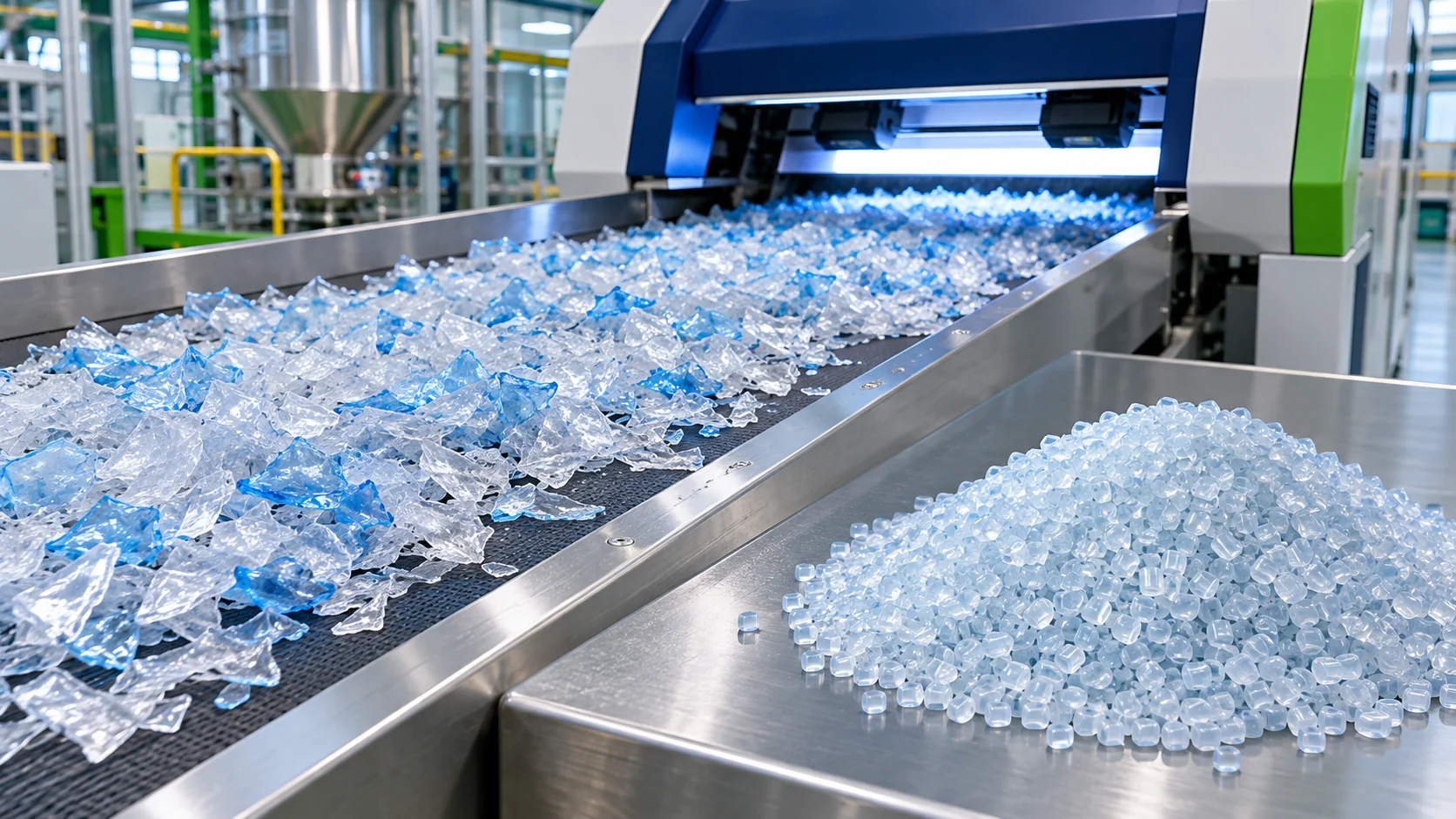
An rPET inquiry should state whether the material will be used for fiber, strap, sheet, or food-contact packaging. Ask for feedstock source, washing process, PVC and polyolefin contamination, metals, fines, color, odor, intrinsic viscosity, moisture, and traceability. Never accept “food grade” without evidence for the destination market and intended use.
In the EU, recycled plastic for food contact falls under Regulation EU 2022/1616 and the broader food-contact framework. PET beverage bottles placed on member-state markets must contain at least 25 percent recycled plastic on an average basis from 2025. This creates demand for qualified rPET and raises the documentation standard.
How to specify unsaturated and saturated polyester resins
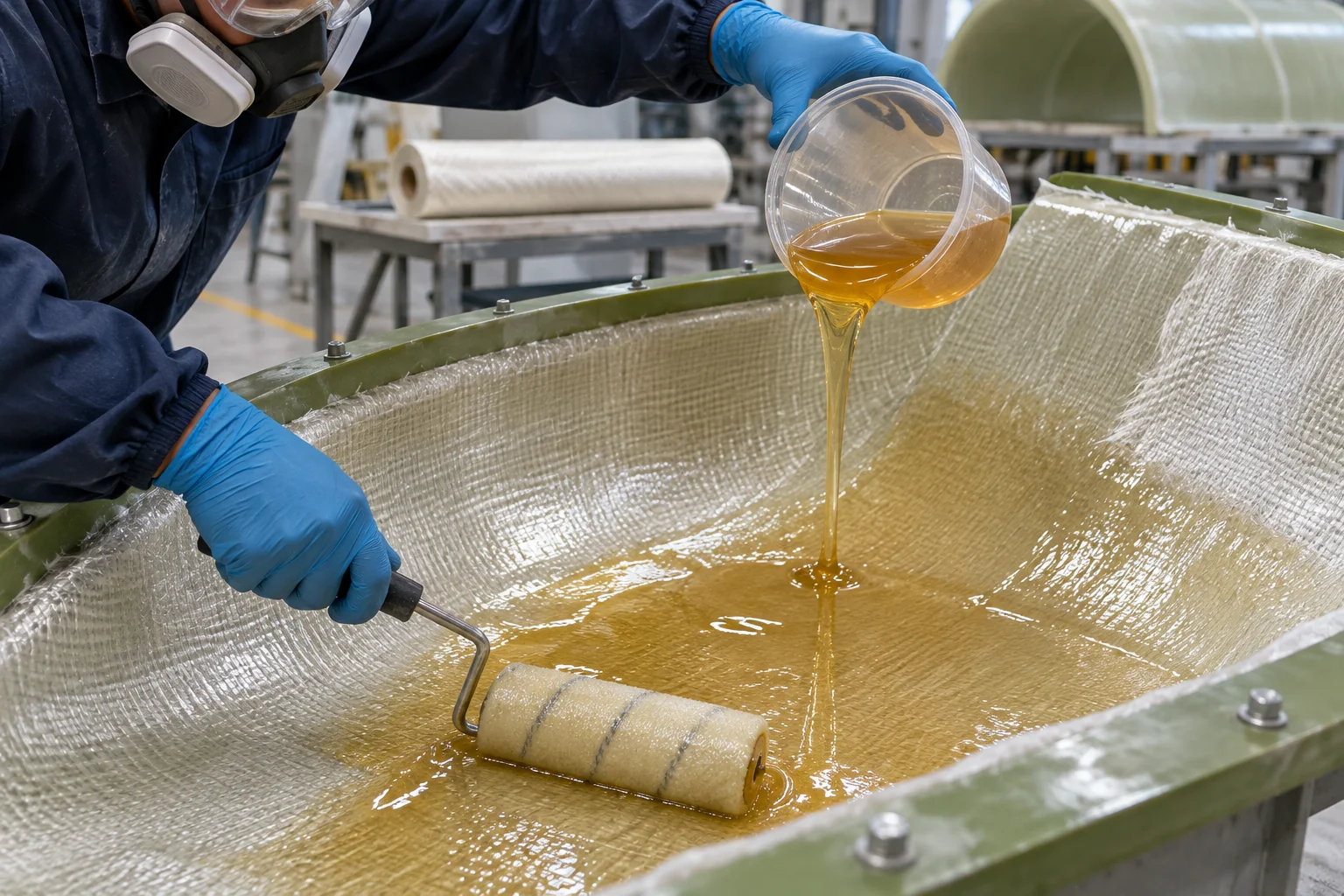
For unsaturated polyester resin, the application determines the chemistry. General-purpose orthophthalic grades are common in standard FRP products. Isophthalic and terephthalic systems are selected where improved chemical, thermal, or mechanical performance is required. Other formulations are designed for artificial stone, sanitaryware, pultrusion, casting, roofing sheets, buttons, or low-shrink applications.
Your RFQ should identify the molding process, reinforcement, filler loading, part thickness, workshop temperature, desired gel time, and finished-part performance. Ask for viscosity at a defined temperature and method, gel time with a specified catalyst system, acid value, non-volatile and styrene content, peak exotherm, shelf life, and storage temperature. ISO 2114 covers acid value; ISO 2535 covers ambient-temperature gel time.
For saturated polyester resin used in powder coatings or adhesives, state the curing partner and target film properties. Relevant values include acid or hydroxyl number, glass-transition temperature, melt viscosity, color, curing ratio, flexibility, weatherability, and chemical resistance. Do not automatically substitute a hybrid powder-coating resin into a TGIC, hydroxyalkylamide, or polyurethane system.
The quality documents that should travel with the order
A credible offer includes a current technical data sheet, safety data sheet, and lot-specific certificate of analysis. Also request the producer and plant, batch numbering, country of origin, manufacturing date, shelf life where relevant, packaging, and compliance declarations.
PET water content can be measured under ISO 15512. Excess water during melting causes hydrolysis and reduces molecular weight, so keep bags sealed, protect them from condensation, and agree on drying with the resin and equipment suppliers.
For a first order, use a staged qualification:
- Review the producer and grade documents.
- Approve a representative sample and run a line trial.
- Agree on a signed product specification and test methods.
- Inspect packaging, marks, quantity, and container condition before shipment.
- Retain sealed reference samples from the shipped lot.
Independent inspection is valuable for large orders, new grades, and first transactions. Write the scope into the contract; “inspection required” is too vague.
Packaging logistics and commercial terms
PET chips are commonly shipped in moisture-resistant bags or large flexible bulk containers, with palletization and container loading agreed by buyer and seller. Unsaturated polyester resins are often supplied in drums or intermediate bulk containers. Because formulations containing styrene or other solvents may be regulated for transport, the SDS, flash point, UN classification, packaging group, carrier acceptance, and route must be checked for the exact product.
Ask for a named Incoterms 2020 place or port. Compare FOB, CFR, CIF, and delivered options using the same net weight and packaging. Allocate inspection, terminal charges, detention, demurrage, document legalization, and destination testing.
Trade involving Iran requires sanctions and counterparty due diligence. Rules vary by nationality, currency, bank, insurer, vessel, product, end use, and destination. OFAC maintains Iran sanctions and guidance concerning petrochemical trade. Screen parties and vessels, verify origin and shipping documents, and obtain qualified legal advice before commitment.
A practical RFQ checklist for faster and better quotations
Before requesting a price, send the supplier the information below. It usually saves several rounds of messages and makes competing offers easier to compare.
- Product family and exact end use
- Processing technology and equipment type
- Required grade or approved equivalent
- Full specification with limits and test methods
- Food-contact or other regulatory requirements
- Monthly demand and trial quantity
- Packaging and pallet preference
- Destination port and requested Incoterm
- Required inspection and shipping documents
- Payment, banking, and compliance conditions
If you do not know the Iranian grade equivalent, send the data sheet of your current resin and describe any processing problem you want to solve. A serious supplier search should begin with that comparison, not with a list of company names.
Turning interest into a controlled sourcing process
Iran’s PET and polyester resin market offers regional access, established production, and competitive formulations. It also requires careful grade matching and realistic attention to supply, documentation, and compliance. The best offer is the one that survives a technical trial, document review, landed-cost calculation, and lawful shipment plan.
IXPORT supports the points where foreign buyers often lose time. NEXUS B2B provides structured contacts across Iran’s chemical, polymer, packaging, food, textile, and industrial sectors. IXPORT can also help define the target supplier profile, verify counterparties, coordinate inquiries, and connect discussions with inspection and logistics support.
If your plan includes distribution, representation, investment, or a local presence, Iran Gateway offers a Persian company profile and market-entry support. It helps Iranian partners understand who you are, what you buy or sell, and how you want to cooperate.
To start a productive conversation, tell us your application, current grade, monthly volume, destination, required certification, and preferred Incoterm. We can then move from a broad request for “PET or polyester resin from Iran” to a shortlist that fits your production line and buying rules.
Frequently asked questions
Is Iranian PET suitable for food and beverage packaging
It may be suitable when the exact grade, additives, production controls, migration requirements, and supporting documents meet the rules of the destination market and intended use. Do not rely on the phrase “food grade” alone. For the United States, buyers commonly review 21 CFR 177.1630 and any relevant food-contact notifications. For the EU, Regulation EU 10/2011 and its current amendments are central to the assessment.
What is the difference between HS 390761 and 390769
HS 390761 covers PET in primary forms with a viscosity number of 78 ml/g or higher. HS 390769 covers PET below that threshold. The declared code should follow an appropriate test result and the destination tariff schedule.
What should a first order look like
Start with document review and a representative sample, followed by a controlled trial order. Define the specification, inspection scope, documents, payment route, and claims procedure before scaling up.
How can a buyer find Iranian resin suppliers and partners
Use a verified directory to identify candidates, then qualify them against the grade, plant, export history, documents, and compliance requirements. NEXUS B2B includes chemical, polymer, packaging, food, textile, and industrial company records for this first screening.
Share your required PET grade, application, monthly volume, destination, and preferred delivery term through the IXPORT contact page.
Sources and data notes
- World Bank WITS and UN Comtrade, Iran PET imports and exports under HS 390760, 2023. Read source
- World Bank WITS and UN Comtrade, Iran HS 390791 and HS 390799 exports, 2023. Read source
- World Bank WITS and UN Comtrade mirror imports from Iran under HS 390791, 2024. Read source
- World Bank WITS and UN Comtrade, global PET exports under HS 390760, 2024. Read source
- United Nations Statistics Division, HS 390761, 390769, 390791, and 390799 classification details. Read source
- ISO 1628-5, thermoplastic polyester viscosity; ASTM D4603-26, PET inherent viscosity. Read source
- ISO 15512:2019, water content in plastics; ISO 2114:2000, polyester resin acid value; ISO 2535:2001, unsaturated polyester resin gel time. Read source
- European Union Regulation 10/2011 on plastic food-contact materials and Regulation 2022/1616 on recycled plastic food-contact materials. Read source
- European Union Directive 2019/904, recycled-content target for PET beverage bottles. Read source
- US Electronic Code of Federal Regulations, 21 CFR 177.1630, polyethylene phthalate polymers. Read source
- US Treasury OFAC, Iran Sanctions program and maritime compliance guidance. Read source
- Public industry profile of Iran PET capacity by bottle and fiber grade. Read source
- IXPORT Iran Gateway and NEXUS B2B service pages. Read source
Comments