

Buying Plastic Film and Sheet from Iran
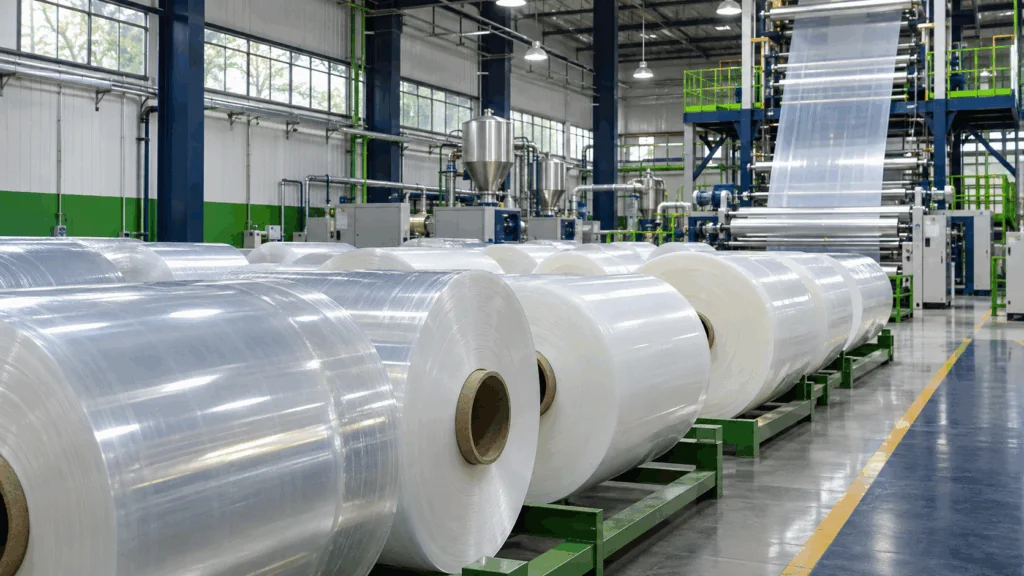
Buying Plastic Film and Sheet from Iran
A request for “plastic film” sounds simple until the quotations arrive. One supplier may offer 30 micron LDPE film, another may quote a three layer LLDPE structure, and a third may assume the buyer wants finished shrink hoods. All three products can be useful, but they will not behave the same on a packing line.
This is where international buyers often lose time. The resin name alone does not define the product. Thickness, layer structure, surface treatment, slip level, sealing window, optical properties, roll construction, and end use all affect performance. If you are considering plastic film and sheet from Iran, a good buying process begins with your application and ends with a tested shipment specification.
This guide explains the main product categories, customs codes, Iran reported trade data, and the checks that should come before a commercial order.
Film and sheet are commercial descriptions not complete specifications
Plastic film is generally thin and flexible, while sheet is thicker and more rigid. The dividing line changes by industry and standard. ASTM D882 treats thin plastic sheeting below 1.0 mm, and ASTM terminology commonly uses film for material no thicker than 0.25 mm. In trade, the practical solution is to define the polymer, thickness, width, layers, treatment, additives, roll construction, and final application.
Finished bags, sacks, pouches, self adhesive films, and printed packaging can fall under different customs headings from unconverted film. Classification should therefore follow the physical product being shipped, not the wording used in an email.
Main plastic film and sheet families available to buyers
| Product family | Common forms | Typical applications | Specifications buyers should define |
| Polyethylene film | LDPE LLDPE and HDPE film | Shrink packaging stretch film liners bags greenhouse covers mulch and construction film | Density thickness tensile tear puncture dart impact shrink force seal range slip antiblock and UV package |
| Polypropylene film | BOPP CPP and cast sheet | Food packaging labels lamination stationery and textile packaging | Orientation thickness haze gloss COF corona treatment heat sealability and shrinkage |
| PET film and sheet | BOPET APET and thermoforming sheet | Flexible packaging trays labels electrical insulation and industrial laminates | Intrinsic viscosity thickness haze clarity shrinkage surface treatment gels and thermal behavior |
| PVC film and sheet | Rigid flexible clear colored and calendared products | Pharmaceutical blisters construction decoration stationery and industrial covers | Plasticizer content hardness migration clarity shrinkage impact and food or medical compliance |
| Polystyrene sheet | GPPS HIPS and foam sheet | Dairy cups disposable packaging refrigerator liners and display products | Impact strength color gloss thickness tolerance thermoforming behavior and food contact status |
| Engineering plastic sheet | Polycarbonate acrylic ABS and polyamide sheet | Glazing machine guards signage automotive parts and fabricated components | Resin grade UV protection impact performance flatness surface finish and protective masking |
| Multilayer and cellular products | Barrier laminates coextruded structures and foam sheets | Vacuum packaging retort packs insulation protective packaging and industrial liners | Layer structure adhesive tie layers OTR WVTR sealant layer bond strength density and recovery |
The table is a starting point. A producer with a strong line for agricultural PE film may not be the right supplier for low haze lamination film. Likewise, a company that extrudes PET sheet may not manufacture biaxially oriented PET film. Ask which process and production line will make your order.
Why Iran can be relevant to an international buyer
Iran combines domestic polymer production with a broad converting sector that serves packaging, agriculture, construction, food, and industry. Regional geography supports road trade with nearby markets, while southern ports connect cargo with Gulf and overseas routes. Still, resin allocation, line availability, exchange rates, payment channels, and freight can change the result. Compare landed cost for a product that passes your trial, and ask whether the converter can repeat the same formulation and winding quality in later lots.
Iran trade data for plastic film and sheet
World Bank WITS and UN Comtrade report Iran’s 2023 trade under HS 3920, which covers non cellular plastic plates, sheets, film, foil, and strip that are not reinforced, laminated, supported, or similarly combined with other materials.
Iran reported exports of USD 295.45 million and 239,130 tonnes under HS 3920 in 2023. Iraq was the largest destination at USD 153.28 million and 123,171 tonnes. It was followed by Afghanistan at USD 37.58 million and 30,158 tonnes, Turkey at USD 33.06 million and 24,582 tonnes, Pakistan at USD 15.60 million and 13,709 tonnes, and Turkmenistan at USD 10.19 million and 8,333 tonnes. These five markets represented about 84.5 percent of the reported export value.
Polyethylene film and sheet under HS 392010 made up a large part of this flow. Iran exported USD 202.15 million and 187,829 tonnes in 2023. That was approximately 68.4 percent of HS 3920 export value and 78.5 percent of its volume. The figures confirm that PE film and sheet are central to Iran’s converted plastics trade.
Iran also reported HS 3920 imports of USD 180.42 million and 51,484 tonnes in 2023. The leading sources were China at USD 73.01 million, Turkey at USD 35.53 million, the United Arab Emirates at USD 26.01 million, South Korea at USD 13.48 million, and other Asian suppliers at USD 10.26 million.
The average declared value was about USD 1.24 per kg for exports and USD 3.50 per kg for imports. This gap may reflect a different product mix, including higher value specialty, optical, barrier, or technical films on the import side. Customs data does not identify grade, thickness, contract terms, or quality, so the unit values should not be treated as price quotations.
The data presents Iran as both an exporter and an importer. Commodity and regional products can move outward in substantial volumes, while Iranian manufacturers still purchase specialist films and sheets from foreign producers. That two way market creates opportunities for overseas buyers sourcing from Iran and for foreign suppliers seeking suitable Iranian customers.
HS codes to confirm before shipment
| HS code | General description | Typical trade relevance |
| 392010 | Non cellular film and sheet of polymers of ethylene | LDPE LLDPE and HDPE film sheet and liners when not reinforced or laminated |
| 392020 | Non cellular film and sheet of polymers of propylene | BOPP CPP and other PP film or sheet subject to product construction |
| 392030 | Non cellular film and sheet of polymers of styrene | GPPS and HIPS film or sheet in qualifying forms |
| 392043 | PVC film and sheet containing at least 6 percent plasticizer | Commonly relevant to flexible PVC products |
| 392049 | Other non cellular PVC film and sheet | Commonly relevant to rigid or lower plasticizer PVC products |
| 392061 | Non cellular film and sheet of polycarbonate | Clear glazing and technical sheet in qualifying forms |
| 392062 | Non cellular film and sheet of PET | BOPET APET and other PET film or sheet in qualifying forms |
| 392069 | Non cellular film and sheet of other polyesters | Polyester products not classified in more specific subheadings |
| 3921 | Other plastic film sheet foil and strip | Includes many cellular reinforced laminated supported or combined products |
| 3919 | Self adhesive plastic film sheet and tape | Used when the shipped product has a self adhesive layer |
These descriptions are simplified for commercial planning. Multilayer structures, printed films, geomembranes, finished packaging, floor or wall coverings, and products combined with textiles or aluminum may require another heading. Agree on the code with the exporter, importer, and destination customs broker before the pro forma invoice is finalized.
How buyers should specify polyethylene film
For shrink film, state the bundle weight, tunnel temperature, shrink percentage in both directions, holding force, optics, and print requirement. For stretch film, define hand or machine application, pre stretch, cling side, puncture resistance, roll weight, and core tolerance. Greenhouse film may require a defined UV life, anti drip performance, light transmission, and resistance to agrochemicals. Do not approve PE film by thickness alone; resin blend, additives, and layer design determine how it seals, tears, and runs.
How buyers should specify PP PET PVC and rigid sheet
BOPP and CPP buyers should state whether the film is plain, heat sealable, metallizable, matte, pearlized, cavitated, or treated for printing. Express corona treatment in dynes per centimeter because treatment can decay in storage. PET buyers should define packaging, electrical, label, or thermoforming use, then specify haze, shrinkage, surface coating, and thermal behavior. For PVC and rigid engineering sheet, include formulation, hardness or impact performance, flatness, surface finish, UV layer, masking, fabrication method, and any application specific declarations.
Quality tests that make quotations comparable
A useful specification names both the property and the test method. ISO 527-3 and ASTM D882 cover tensile testing for film and thin sheet. ASTM D1003 addresses haze and luminous transmittance for transparent plastics. ASTM D1894 measures static and kinetic coefficients of friction, which influence web handling and packaging line performance.
Depending on the application, buyers may also request tear, dart impact, puncture, seal strength, hot tack, shrinkage, gloss, OTR, WVTR, corona treatment, gel count, color, and odor. Ask for a current technical data sheet and a lot specific certificate showing actual results. Roll requirements should cover core, width, net weight, outside diameter, winding direction, splices, edge alignment, telescoping, and traceable labels. Poor winding can stop a line even when laboratory values pass.

Food contact and sustainability requirements
If the film or sheet will contact food, the phrase “food grade” is not sufficient. The buyer should identify the destination market, food type, contact temperature, contact time, single or repeated use, and whether the material will be printed, laminated, or recycled.
For the European Union, Regulation EU 10/2011 governs many plastic food contact materials. Buyers may need a declaration of compliance, migration tests, and information on restricted substances. Regulation EU 2025/40 on packaging and packaging waste has applied since 12 August 2026 and introduces further packaging obligations. In the United States, the FDA basis depends on the polymer, additives, and conditions of use. For recycled content, define whether it is post industrial or post consumer, its calculation method, traceability, and effect on color, odor, gels, and performance.
A supplier qualification process that reduces surprises
Confirm the legal company, production address, product line, export experience, and whether the seller is the manufacturer or a trader. For significant orders, inspection can verify the line, laboratory, raw material controls, traceability, and packing. Review documents, test a representative sample on the intended equipment, and approve a signed specification. The contract should state the inspection point, tolerances, claims period, remedy, and document list. Retain sealed samples from the trial and shipped lot.
Pricing payment and logistics
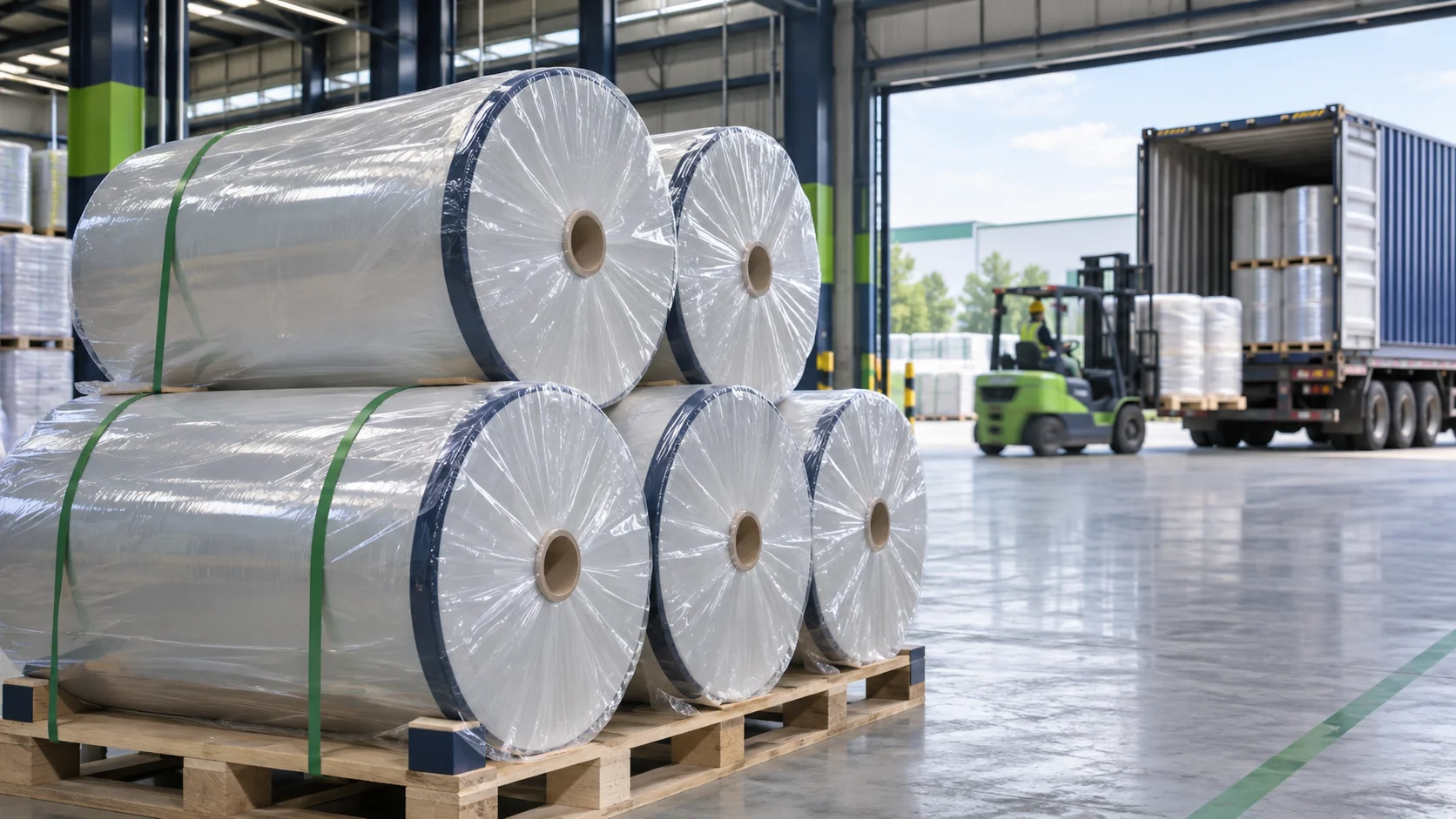
Prices respond to resin costs, formulation, thickness, layers, additives, treatment, printing, order size, roll dimensions, energy, and exchange rates. Compare offers on the same net weight, tolerance, packing, Incoterm, destination, and inspection scope. For sheet, compare both price per kilogram and per square meter. Specify pallet type, roll orientation, edge protection, wrapping, stacking limit, container bracing, and labeling. Request loading photos and a packing list that identifies each roll.
Transactions involving Iran require sanctions, bank, insurer, carrier, vessel, counterparty, product, end use, and destination screening. Applicable rules depend on the parties and jurisdictions involved. OFAC maintains current Iran sanctions information, and other countries operate their own regimes. Obtain qualified compliance advice before committing funds or cargo.
Information to include in a serious RFQ
- Polymer and product construction including every layer
- Final application and packing or converting equipment
- Thickness width length and permitted tolerances
- Required mechanical optical barrier and sealing properties
- Surface treatment additives color printing and winding direction
- Food contact recycled content or destination compliance requirements
- Trial quantity monthly volume and annual forecast
- Roll core pallet labeling and container packing requirements
- Destination and requested Incoterm 2020 rule
- Inspection certificate payment and compliance conditions
If you already use a successful product, send its technical data sheet and a small reference sample when possible. If you are trying to fix a problem such as weak seals, blocking, high haze, roll telescoping, or excessive breakage, explain the problem. That information helps a converter propose a genuine equivalent instead of guessing from a trade name.
Building the right business connection in Iran
Iran’s film and sheet sector offers real export volume, particularly in polyethylene products, but successful sourcing depends on careful product matching. The most valuable supplier is the one that understands your line, documents the agreed properties, and can repeat the result after the trial order.
NEXUS B2B can help international buyers build an initial shortlist through IXPORT‘s Chemical Plastic Polymer and Rubber Industries directory. A directory is the beginning of qualification, not the end, so each candidate should still be checked against the application, line capability, documents, and commercial route.
The market also works in the other direction. Foreign producers of barrier films, technical sheets, specialty packaging, and processing inputs may find Iranian demand that is not met by commodity local supply. Iran Gateway helps international companies present their products in Persian, reach relevant Iranian audiences, and organize a more informed market entry process.
To discuss a sourcing or market entry project with IXPORT, send us the polymer, application, specification, monthly volume, destination, and preferred Incoterm. The clearer your request is, the faster we can identify whether Iran contains a realistic commercial match.
Frequently asked questions
Which Iranian plastic film has the strongest export position
The 2023 WITS data shows polyethylene film and sheet under HS 392010 as the largest component of Iran’s HS 3920 exports. It represented USD 202.15 million and 187,829 tonnes. Product suitability still depends on the exact film type and specification.
What is the difference between HS 3920 and HS 3921
HS 3920 generally covers non cellular plastic film and sheet that is not reinforced, laminated, supported, or similarly combined with other materials. HS 3921 covers other plates, sheets, film, foil, and strip, including many cellular or combined products. Customs classification must follow the actual construction.
Should a buyer request price per kilogram or per square meter
Request both when yield matters. Price per kilogram supports trade and freight comparison, while price per square meter shows the usable cost at the agreed thickness and density. Confirm whether quoted weight includes the core and packaging.
How should a first order be structured
Approve documents and a representative sample first, run a production trial, sign the technical specification, and use a controlled commercial quantity. Define inspection, packaging, payment, shipment documents, claims, and compliance responsibilities before production begins.
Looking for Iranian Polypropylene manufacturers? Get access to manufacturer contacts and business opportunities through Ixport’s NEXUS B2B Directory.
Can foreign film manufacturers sell to Iran
Iran imports significant volumes of plastic film and sheet, especially products with specialized performance or converting requirements. Market access depends on current Iranian import rules, buyer demand, registration, payment, logistics, and applicable sanctions. Iran Gateway can support early market research and local presentation.
Sources and data notes
- World Bank WITS and UN Comtrade, Iran exports under HS 3920, 2023. Read source
- World Bank WITS and UN Comtrade, Iran imports under HS 3920, 2023. Read source
- World Bank WITS and UN Comtrade, Iran exports under HS 392010, 2023. Read source
- World Bank WITS and UN Comtrade mirror exports to Iran under HS 3920, 2024. Read source
- ISO 527-3:2018, tensile test conditions for plastic films and sheets. Read source
- ASTM D882, tensile properties of thin plastic sheeting. Read source
- ASTM D1003, haze and luminous transmittance of transparent plastics. Read source
- ASTM D1894, static and kinetic coefficients of friction of plastic film and sheeting. Read source
- European Union Regulation 10/2011 on plastic materials and articles intended to contact food. Read source
- European Union Regulation 2025/40 on packaging and packaging waste. Read source
- US Treasury OFAC, Iran Sanctions program. Read source
- IXPORT NEXUS B2B and Iran Gateway service pages. Read source
Comments