

Iran Plastic Packaging Export Guide for Global Buyers
Buying Plastic Packaging from Iran
Start with the pack your product actually needs
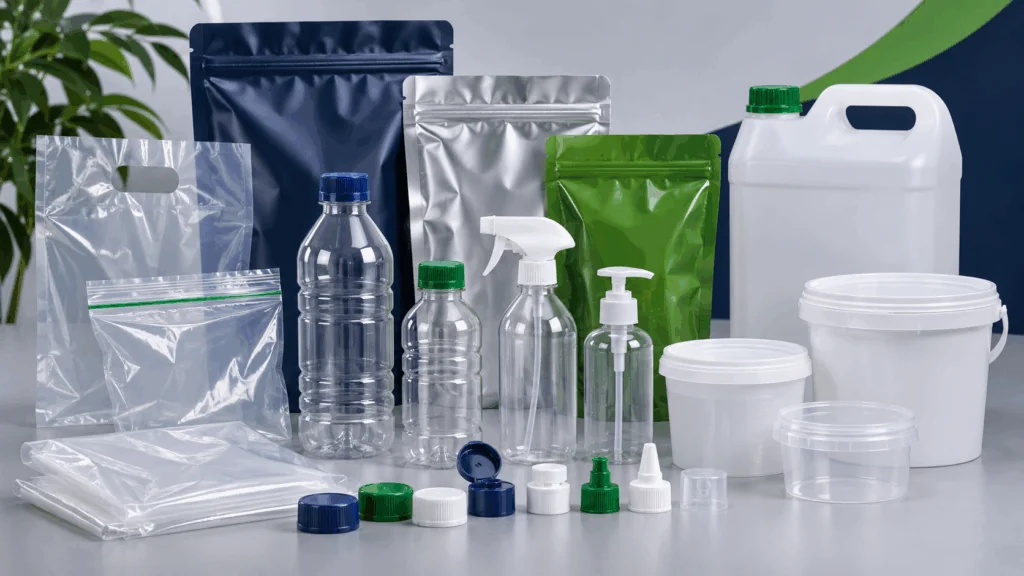
Iran plastic packaging exports cover polyethylene sacks, printed pouches, PET and HDPE containers, polypropylene tubs, caps, closures, crates, trays and industrial packing articles. That range gives an overseas buyer useful options, but it also makes a vague request for “plastic packaging” difficult to quote.
Start with the packed product. Is it sensitive to oxygen, moisture, light or heat? Will the pack be hot filled, frozen, stacked or transported across a hot route? Does it need tamper evidence, migration testing or a pharmaceutical quality system? These answers determine the polymer, structure, process and test plan. This guide helps buyers define those points, understand Iran’s trade position and qualify a suitable supplier.
The main plastic packaging families
| Product family | Typical materials | Common formats | Points to specify |
| Flexible packaging | LDPE LLDPE HDPE PP PET PA EVOH | Bags pouches liners and laminates | Structure thickness seal barrier print and roll direction |
| Bottles and containers | PET HDPE LDPE PP | Bottles jars jerrycans preforms and tubs | Capacity weight neck color top load drop and leak |
| Caps and closures | HDPE PP TPE and liners | Screw caps flip tops dispensing caps and plugs | Neck torque liner tamper band and dispensing rate |
| Rigid transport packaging | HDPE PP | Crates boxes bins trays and totes | Dimensions load nesting stack impact and temperature |
| Thermoformed packs | PET PP PS and multilayer sheet | Cups trays clamshells and lids | Gauge cavity sealing surface clarity and temperature |
| Industrial packaging | HDPE PP and multilayer structures | Chemical containers liners and technical supports | Compatibility permeation closure and approval requirements |
One commercial warning matters here. Finished packing articles generally sit in HS heading 3923, but packaging film supplied in rolls may fall under headings 3920 or 3921. Woven polypropylene sacks can fall under heading 6305, and some medical or technical items may be classified elsewhere. Product name alone is not enough. Confirm the tariff code against the physical construction, use and destination customs rules before issuing shipping documents.
Iran plastic packaging export data
The following comparison uses Iran’s 2025 exporter reported WITS series so that every destination and product line comes from one consistent HS 3923 dataset. Iran reported USD 288.77 million of plastic packing articles and closures, weighing 230,286 tonnes. The implied average was about USD 1.25 per kilogram, but it blends basic sacks with printed and technical products and is not a quotation benchmark.
Iraq received USD 117.13 million, equal to 40.56 percent of the value. Pakistan followed with USD 98.34 million or 34.05 percent. With Afghanistan, Turkmenistan and Azerbaijan, the top five represented 90.39 percent. This concentration confirms a regional trade pattern, so buyers outside these markets should check a supplier’s experience with their own labeling, testing and documents.
| Export product in 2026 | HS code | Value USD million | Net weight tonnes | Share of HS 3923 value |
| Sacks and bags of ethylene polymers | 392321 | 96.05 | 75,776 | 33.26 percent |
| Other plastic packing articles | 392390 | 79.14 | 59,319 | 27.40 percent |
| Sacks and bags of other plastics | 392329 | 57.93 | 47,761 | 20.06 percent |
| Bottles carboys flasks and similar articles | 392330 | 35.50 | 34,486 | 12.29 percent |
| Plastic stoppers lids caps and closures | 392350 | 14.83 | 8,842 | 5.13 percent |
| Plastic boxes cases and crates | 392310 | 5.22 | 4,000 | 1.81 percent |
Flexible sacks and bags under codes 392321 and 392329 generated USD 153.98 million, more than half of the heading. Bottles, closures, rigid containers and other packing articles show a broader conversion base.
Five published six digit lines also accounted for at least USD 51.23 million of Iranian imports in 2023. Ethylene polymer sacks and bags reached USD 21.81 million, closures USD 9.45 million and other packing articles USD 10.53 million. Differences in unit value can reflect specialized structures, proprietary systems and smaller consignments. For foreign manufacturers, these imports point to possible demand for high barrier, pharmaceutical and controlled dispensing products.
HS codes buyers should recognize
| HS code | General description | Examples and classification notes |
| 392310 | Plastic boxes cases crates and similar articles | Crates boxes totes and transport containers |
| 392321 | Sacks and bags of ethylene polymers | Finished PE bags liners sacks and cones |
| 392329 | Sacks and bags of other plastics | PP PET PA and multilayer bags or pouches |
| 392330 | Plastic bottles carboys flasks and similar articles | PET or HDPE bottles jerrycans and hollow containers |
| 392340 | Plastic spools cops bobbins and similar supports | Supports for cable textile film and wound products |
| 392350 | Plastic stoppers lids caps and other closures | Screw caps plugs and dispensing closures |
| 392390 | Other plastic articles for packing goods | Trays tubs inserts and other technical packs |
| 3923 | Complete heading for plastic packing articles and closures | Useful for analysis but too broad for shipment declaration |
HS classification should be checked with the customs broker in the importing country. Resin type, whether the item is finished, whether it is reinforced or laminated and its principal use can change the result.
Flexible bags pouches and liners
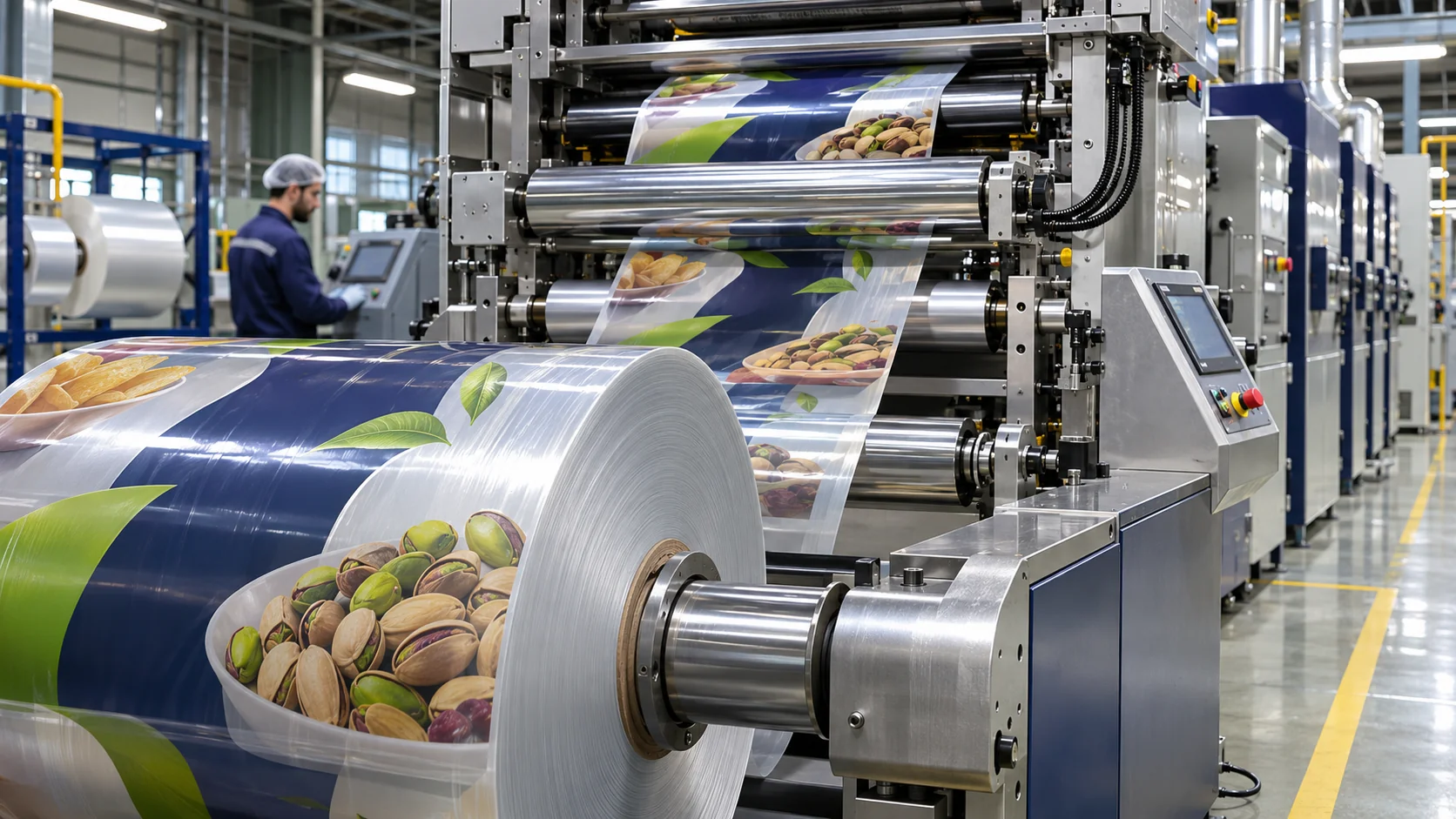
Two bags with the same dimensions can behave differently because of resin grade, layer distribution, additives, surface treatment and sealant design. For a PE bag, specify width, length, gusset, thickness tolerance, seal, perforation, color and pack count. Automatic lines also need roll width, core and reel diameter, unwind direction and splice limits. Printed work requires an artwork standard, registration tolerance and rub resistance.
Barrier pouches need a complete layer structure, not the general phrase “laminated film.” State the product, fill temperature, shelf life, storage climate and target oxygen and water vapor transmission rates. The supplier can then propose structures such as PET PE, BOPP CPP, PA PE, metallized film or EVOH coextrusion. Relevant tests can include thickness, tensile strength, dart impact, puncture, seal strength, hot tack, friction, barrier and residual solvents.
Bottles jars jerrycans and preforms

The bottle body, neck finish, cap, liner, filling method and product must work as one system. PET suits many clear containers, HDPE is common for dairy, chemicals and personal care, and PP may suit higher temperature uses depending on its grade and design.
The drawing should state nominal and brimful capacity, weight, tolerances, neck standard, color and visual limits. Performance can include top load, drop, leak, stress crack resistance and wall distribution. Approve both minimum performance and the permitted weight range so that later downgauging does not invalidate the line trial.
Preforms use freight space better than empty bottles but transfer blowing risk to the buyer. Confirm preform weight, neck finish, resin specification, color, gate quality and compatibility with the mold and blowing equipment.
Caps closures and dispensing components
A closure that fits by hand can still leak in transport. Provide the neck drawing or an approved bottle and state application and removal torque. Define the tamper band, liner, venting, induction seal or dispensing rate where relevant. Chemical, cosmetic and food products should be tested with the actual formulation because oils, solvents and surfactants can affect seals or cause stress cracking.
Crates trays tubs and returnable packs
For crates and trays, define dimensions, tare weight, static and dynamic load, stack height, nesting ratio, impact strength and temperature range. Agricultural crates may need ventilation without losing stacking strength. Ask to inspect current samples and mold condition because worn molds can cause flash, warpage and inconsistent stacking even when the resin certificate is acceptable.
Food pharmaceutical and cosmetic requirements
Food contact compliance is market specific. In the European Union, plastic food contact materials must follow Regulation EC 1935 2004, good manufacturing practice rules and Regulation EU 10 2011, including applicable migration limits. A generic “food grade” statement does not replace a declaration tied to the actual material, food type, time and temperature.
Primary packaging for medicines carries a higher quality burden. ISO 15378 combines ISO 9001 requirements with good manufacturing practice for primary packaging materials. Buyers should also define controlled area expectations, change control, traceability and retention samples.
For cosmetics, request color standards, decoration adhesion, closure dose, leak testing and compatibility studies with the final formulation. Fragrances and active ingredients can soften, stain or crack a pack that looks perfect when empty.
How to qualify an Iranian packaging supplier
A factory review should follow the process. For flexible packaging, inspect film sourcing or extrusion, printing, lamination, curing, slitting and bag making. For bottles and rigid packs, review resin handling, molding, mold maintenance, leak testing and clean storage.
Ask for recent examples, machine list, quality plan, calibration status, batch traceability and relevant certificates. Match the legal company, factory, bank beneficiary and export documents, and identify subcontracted operations. Before volume production, approve drawings, artwork, color and a signed golden sample, then run a pilot batch on the actual filling or packing line.
Quality documents and inspection plan
The specification should state the test method, sample size, frequency and acceptance limit. A certificate of analysis is useful only when it reports measurements linked to the shipment batch, rather than generic values copied from a data sheet.

Pre shipment inspection can cover quantity, dimensions, weight, appearance, print registration, barcode, sealing, leak performance, torque and pallet condition. For critical packs, witness tests or send retained samples to an independent laboratory. Define how nonconforming units and rework will be handled before production.
What drives the export price
Resin cost is only one line in the quotation. Structure, thickness, container weight, additives, inks, adhesives, printing cylinders, molds, decoration, testing and waste all affect price. Short printed runs cost more because setup and waste are spread over fewer units.
Separate tooling from unit price. Clarify who owns each mold, cylinder and artwork file, and define a reference for repeat order price adjustments.
Compare quotations on the same Incoterm and specification. Cylinder charges, packing, inspection, inland transport and poor container utilization can erase a low unit price. For empty containers, freight can matter more than a small resin price difference.
Packaging and logistics for packaging
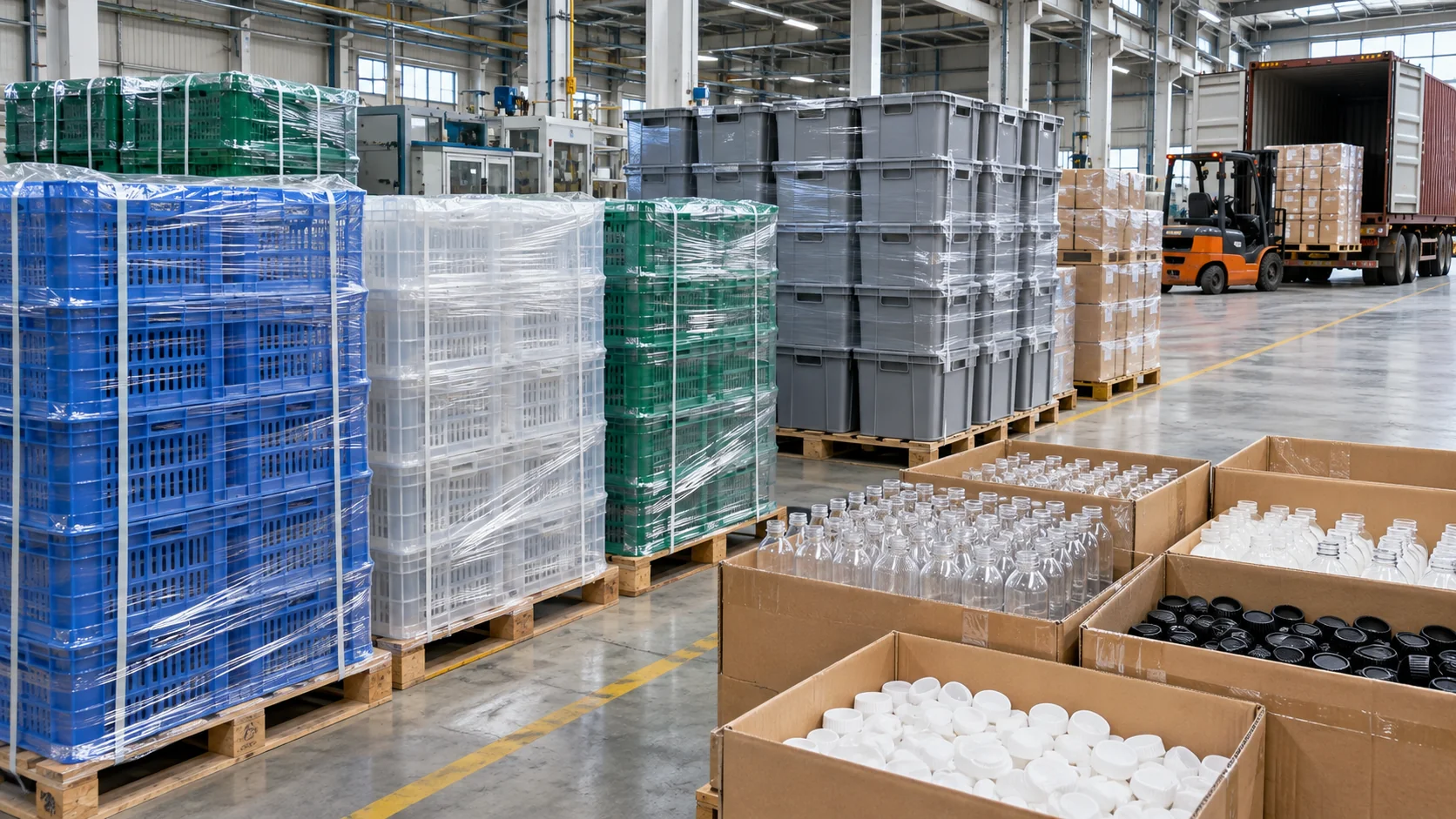
Packaging must arrive clean and dimensionally stable. Protect flexible products from dust, crushing and edge damage, and pack bottles and closures against deformation and contamination. Model container use before confirming the order. Request carton dimensions, units per pallet, pallets per container and weights. Preforms and nestable packs often use freight space far better than empty bottles.
Sustainability and destination market rules
Lower material use, mono material structures and recycled content can conflict with barrier, sealing or food contact rules, so every change requires testing. Replacing a laminate with a recyclable structure is an engineering project, not a wording change on a quotation.
Companies selling into the European Union should review Regulation EU 2025 40, which has applied since 12 August 2026 and affects packaging design, recyclability, information and waste prevention. Translate destination rules into the supplier specification rather than assume one pack complies everywhere.
Selling specialist packaging into Iran
Iran also imports packaging. Foreign suppliers may find opportunities in high barrier films, pharmaceutical components, proprietary closures, dosing systems and specialty products. Entry still requires demand validation, classification, current import requirements, a workable payment route and a qualified local counterpart.
Iran Gateway helps international companies present their capabilities in Persian and build local connections. A useful profile should show applications, filling system compatibility, certifications, minimum quantities, tooling support and available documentation.
Trade compliance before payment or shipment
Transactions involving Iran require current legal and sanctions review. Screen the parties, beneficial owners, banks, insurers, carriers, end users and end use under every applicable jurisdiction. Classification, origin, controlled technology and US content also matter. OFAC and BIS rules can affect US persons, US origin items and some non US transactions.
Do not treat a successful bank conversation or a non dollar quotation as legal clearance. Obtain qualified advice, document the review and confirm that the payment and transport route remains available before production or shipment.
Information to include in a useful RFQ
If you want a supplier to return a comparable quotation, include the following information.
- Packed product and final application
- Destination country and required regulatory framework
- Packaging format material and complete layer structure if known
- Drawing dimensions capacity thickness weight and tolerances
- Barrier shelf life fill temperature and storage conditions
- Printing colors artwork finish barcode and unwind direction
- Closure neck finish seal liner and tamper requirements
- Test methods certificates migration or compatibility evidence
- Annual demand trial quantity delivery schedule and batch size
- Packing method pallet limits Incoterm inspection and payment conditions
If part of the specification is uncertain, send the current pack, filling line information and the problem you are trying to solve. A capable converter should ask questions before recommending a substitute.
Build a practical shortlist with IXPORT
Iran’s export data shows capacity in bags, bottles, closures and other packing articles. The practical next step is to identify manufacturers that run the required process and can document consistent quality.
NEXUS B2B gives foreign buyers a starting list through IXPORT‘s plastics and packaging directories. Use it to identify candidates, then verify machinery, products, certifications, export history and factory location.
IXPORT can also help shape the inquiry and communicate with potential suppliers. Send the format, application, material, dimensions, annual volume, destination and required approvals. Tell us whether you are comparing materials, qualifying an alternative supplier, preparing a line trial or exploring sales into Iran. That answer changes which companies, documents and tests should come first.
Frequently asked questions
What is Iran’s largest exported plastic packaging category
In 2023, ethylene polymer sacks and bags under HS 392321 led at USD 96.05 million and 75,776 tonnes. HS 392390 followed at USD 79.14 million.
Are plastic film rolls included in HS 3923
Not always. Finished bags can fall under HS 3923, while film in rolls often falls under HS 3920 or 3921. Classification depends on the product as shipped.
What should a buyer approve before mass production
Approve the drawing, structure, artwork, tests, tolerances, packing method and a golden sample. Run a pilot on the actual line before full volume.
Can an Iranian supplier provide food contact packaging
Some can, but verify the exact structure and use conditions. Request a declaration of compliance, migration evidence, traceability and relevant test reports.
Can foreign packaging companies sell into Iran
Yes, especially for specialized systems. The plan still needs demand research, classification, import and sanctions checks, payment arrangements and a local strategy.
Sources and data notes
- World Bank WITS and UN Comtrade, Iran HS 3923 exports by destination, 2023. Read source
- World Bank WITS and UN Comtrade, Iran HS 392321 ethylene polymer sacks and bags exports and imports, 2023. Read source
- World Bank WITS and UN Comtrade, Iran HS 392329 other plastic sacks and bags exports and imports, 2023. Read source
- World Bank WITS and UN Comtrade, Iran HS 392330 plastic bottles and similar articles exports and imports, 2023. Read source
- World Bank WITS and UN Comtrade, Iran HS 392350 plastic closures exports and imports, 2023. Read source
- World Bank WITS and UN Comtrade, Iran HS 392390 other plastic packing articles exports and imports, 2023. Read source
- United Nations Statistics Division, HS 3923 classification detail. Read source
- European Commission, food contact materials and plastic materials legislation. Read source
- ISO 15378 2017, primary packaging materials for medicinal products. Read source
- European Union Regulation 2025 40 on packaging and packaging waste. Read source
- ASTM International, current plastics and film test standards. Read source
- US Treasury OFAC, Iran sanctions program and guidance. Read source
- IXPORT NEXUS B2B directories. Read source
- IXPORT Iran Gateway for international companies. Read source
Comments