

Iran Plastics and Plastic Products A Practical Sourcing Guide for Global Buyers
Iran Plastics and Plastic Products A Practical Sourcing Guide for Global Buyers
Iran offers much more than polymer resin
If you ask an international buyer what comes to mind when they hear “Iranian plastics,” the first answer will probably be polyethylene resin. That makes sense. Iran has a large petrochemical base, and primary polymers account for a substantial share of the country’s plastics exports. Still, stopping at resin gives only half the picture.
Iran plastics and plastic products also cover flexible packaging film, rigid sheet, greenhouse film, geomembrane, irrigation pipe, pressure pipe, fittings, bottles, caps, crates, household goods, construction products, masterbatch, compounds and custom-moulded industrial parts. In other words, a buyer can source raw material for a converting line or purchase a finished product ready for distribution or industrial use.
Those are very different buying decisions. A resin buyer cares about grade, melt flow, density and processing behaviour. A buyer of printed packaging cares about thickness, sealing, artwork, colour and food-contact compliance. Someone purchasing pipe needs to think about pressure class, SDR, jointing method and service conditions.
This guide is written for importers, distributors, converters and industrial buyers who want a realistic view of the Iranian market before sending an enquiry. It brings together product categories, 2023 trade data, quality checks, HS classifications, logistics and the questions worth asking a potential supplier.
First decide what you are actually buying
“Plastic products” sounds specific until a supplier tries to prepare a quotation. It can describe anything from a 25-kilogram bag of HDPE pellets to a printed multilayer pouch or a moulded automotive component. A good enquiry begins by placing the product in the correct part of the value chain.
| Product family | Common materials or products | Typical buyers |
| Primary polymers | LDPE, LLDPE, HDPE, PP, PVC, PS, EPS and specialty copolymers | Film producers, injection moulders, pipe makers and compounders |
| Compounds and masterbatch | Filled compounds, colour masterbatch, additive masterbatch and modified polymers | Converters needing a ready-to-process formulation |
| Films sheets and foils | Packaging film, greenhouse film, shrink film, geomembrane and rigid sheet | Packaging, agriculture, construction and printing companies |
| Pipes hoses and fittings | PE water pipe, irrigation pipe, PVC pipe, conduit, hose and fittings | Utilities, contractors, farms and distributors |
| Packaging products | Bottles, preforms, caps, closures, crates, sacks, containers and trays | Food, beverage, chemical, pharmaceutical and logistics companies |
| Finished articles | Housewares, building products, technical parts and custom mouldings | Wholesalers, retailers, contractors and industrial OEMs |
Here is a simple test. If your enquiry says only “HDPE” or “plastic packaging,” could two competent suppliers reasonably offer two different products? If the answer is yes, the brief is not ready yet.
For resin, identify the application and processing route. For a finished product, describe what the item must do, where it will be used and which dimensions or performance limits cannot change. This small amount of work at the beginning prevents long email chains and quotations that cannot be compared.
Why Iran attracts plastics buyers
Iran’s commercial advantage comes from the link between domestic petrochemical production and a broad converting industry. Local manufacturers can source important polymer feedstocks inside the country, while buyers in nearby markets can use road, rail and short-sea routes. That combination supports large resin orders as well as commercial quantities of manufactured goods.
Price naturally attracts attention, but it should not make the decision by itself. A low resin price loses its appeal if the grade varies between batches or the certificate of analysis cannot be matched to the shipment. A cheap bottle is not cheap when neck dimensions cause leakage. A low-cost film becomes expensive when sealing failures stop the packing line.
The better question is not simply, “Is the Iranian offer cheaper?” It is, “Does this offer meet our specification at an acceptable landed cost and risk?”
Iran plastic trade in numbers
UN Comtrade-based reporting puts Iran’s 2023 exports of plastics and articles under HS Chapter 39 at approximately US$4.68 billion. Imports were about US$1.85 billion, leaving an indicative chapter-level trade surplus of roughly US$2.83 billion. Plastics represented close to 4.5 percent of Iran’s reported merchandise exports that year.
The total is useful, but the product breakdown says more about where the real volume sits. WITS reports the following selected export categories for 2023:
| HS code and product | Export value | Export quantity |
| 390110 Polyethylene below 0.94 specific gravity | US$1.474 billion | 1.481 million tonnes |
| 390120 Polyethylene at or above 0.94 specific gravity | US$1.505 billion | 1.614 million tonnes |
| 390311 Expandable polystyrene | US$182.125 million | 139,926 tonnes |
| 390319 Other non-expandable polystyrene | US$169.701 million | 139,930 tonnes |
| 3920 Plastic sheet film foil and strip | US$295.447 million | 239,130 tonnes |
| 3923 Plastic packing articles and closures | US$288.773 million | 230,286 tonnes |
| 3917 Plastic pipes hoses and fittings | US$212.503 million | 153,863 tonnes |
| 392490 Household and toilet articles | US$88.319 million | 63,726 tonnes |
These figures should be read as evidence of trade activity, not as a price list. Each HS category contains different grades, specifications, contract dates and delivery terms. Current quotations can move with feedstock prices, freight, exchange rates and plant availability.
Trade destinations also reveal two different market patterns. In 2023, China purchased about US$908.7 million of Iran’s lower-density polyethylene and US$857.7 million of higher-density polyethylene. Converted products had a stronger regional pattern. Iraq accounted for about US$171.0 million of plastic pipe and fitting exports, US$153.3 million of HS 3920 sheet and film, and US$117.1 million of packaging products. Pakistan purchased approximately US$98.3 million of Iranian HS 3923 packaging articles.
Iran is also an importer where domestic supply is more specialized or limited. Under HS 392690, the country imported US$304.7 million and exported US$77.7 million in 2023. Imports of HS 3920 sheet, film and foil reached US$180.4 million. That gap points to opportunities in engineered components, specialty films, performance additives and other technically demanding products.
Resin buyers need the grade behind the name
Polyethylene is not one product. It may be LDPE, LLDPE, MDPE or HDPE, and the correct choice depends on whether it will become film, pipe, cable coating, a blow-moulded container or an injection-moulded part. Polypropylene may be a homopolymer, random copolymer or impact copolymer. PVC may be suspension or emulsion grade. Polystyrene may be general-purpose, high-impact or expandable.
That is why a supplier’s message saying “we can offer HDPE” is only the start of the conversation.
Ask for the technical data sheet and a certificate of analysis linked to the offered lot.
Depending on the application, review:
• Melt mass-flow rate and the stated test condition
• Density
• Tensile strength and elongation
• Flexural modulus or stiffness
• Impact performance
• Vicat softening or heat-deflection temperature
• Additive package, colour and pellet appearance
• Volatile content, ash and contamination limits
• Food-contact or medical declarations where required
ASTM D4976 gives a system for identifying polyethylene moulding and extrusion materials, while ASTM D4101 covers polypropylene injection and extrusion materials. Standards create a shared technical language, but they do not replace a buyer’s own acceptance limits.
Before committing to a large order, run a representative sample on the actual production line. A laboratory result may look perfect and the material may still behave differently in a particular extruder, mould or cooling setup. A trial costs less than discovering the mismatch after a full container arrives.
Explore Iranian companies operating in the chemical, plastic and polymer industries through the IXPORT NEXUS B2B directory.
Films sheets and packaging need a detailed brief
Buying converted plastic products is often less forgiving than buying resin because small details affect how the product runs on the customer’s equipment.
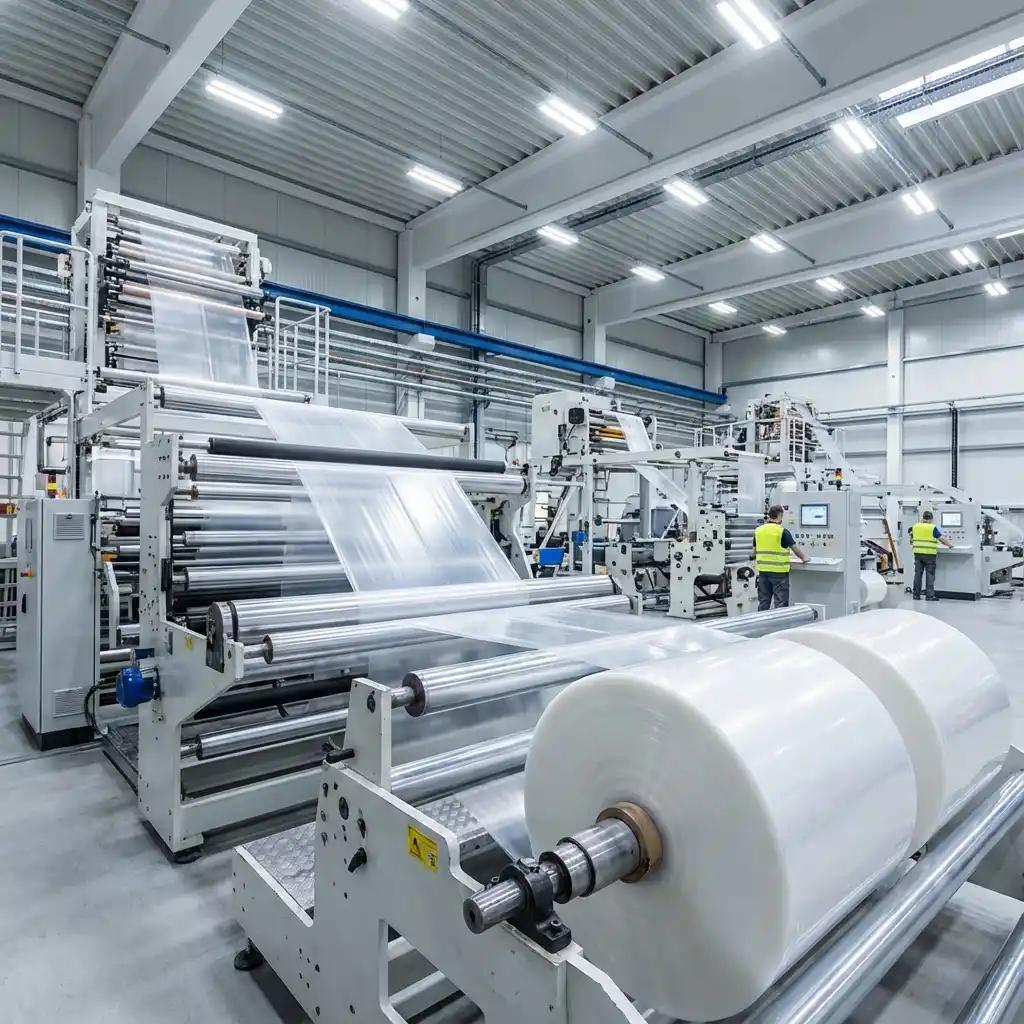
For flexible film, state the polymer structure, number of layers, thickness and tolerance, roll width, core size, maximum roll weight, corona treatment, coefficient of friction, seal range, haze, gloss, dart impact and printing requirements. If the film will touch food, include the food type, contact time and expected temperature.
For rigid sheet, ask about thickness distribution, flatness, colour, impact strength and dimensional tolerance. For bottles, caps and containers, specify the resin, neck finish, closure torque, leak performance, drop test and artwork approval process.
Food-contact compliance must match the destination market. The consolidated EU Regulation No 10/2011, updated in July 2026, includes requirements for authorized substances, migration limits and supporting documentation for plastics intended to contact food. A supplier’s general statement that a product is “food grade” is not enough. Ask for the declaration of compliance and migration test evidence relevant to the intended food and conditions of use.
Pipe enquiries should describe the complete system
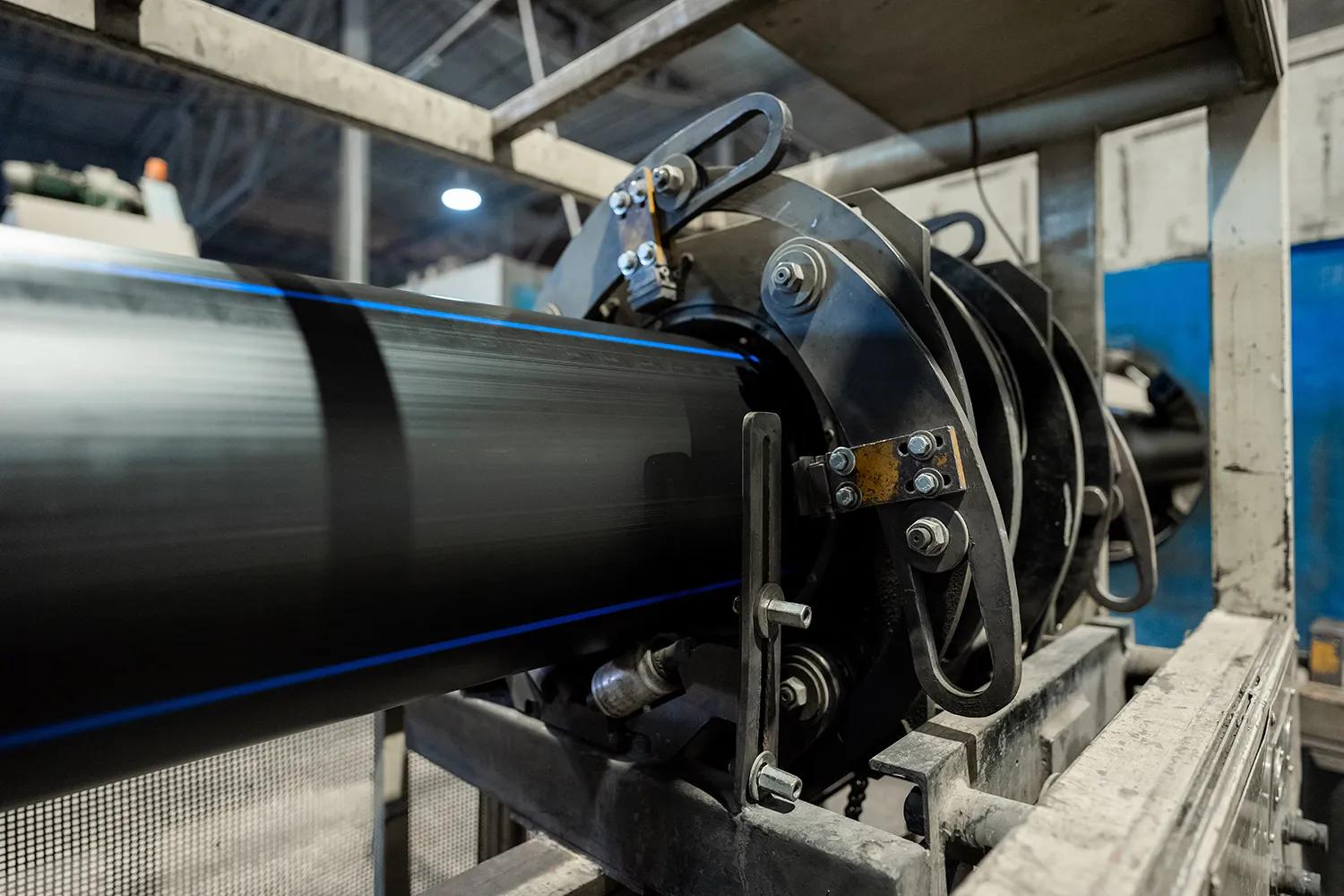
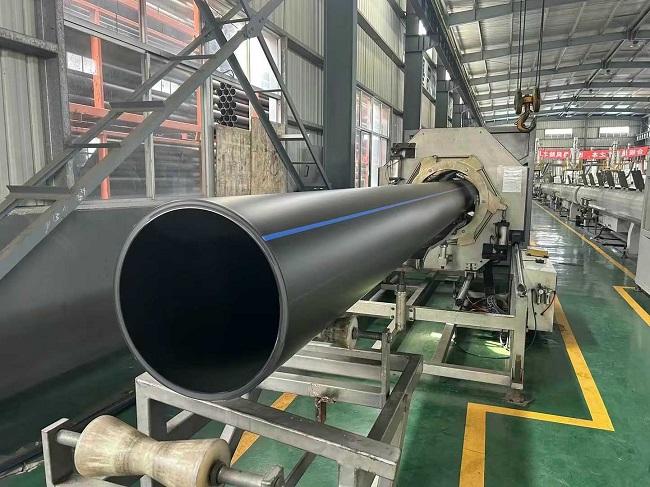
Plastic pipes are among Iran’s stronger converted-product exports, but outward appearance tells you very little. Two black PE pipes can look identical while one is designed for irrigation and the other for pressurized drinking-water service. They are not automatically interchangeable.
For a pressure-pipe enquiry, give the material designation, outside diameter, wall thickness or SDR, pressure rating, service temperature, colour, coil or straight length, jointing method and applicable system standard. ISO 4427 covers polyethylene piping systems for water supply and pressure drainage or sewerage. Its 2019 series includes general requirements and pipe specifications for operating pressures up to 25 bar at a reference temperature of 20°C.
Request traceability back to the raw-material batch, hydrostatic-pressure test records, dimensional reports, carbon-black dispersion results where relevant and permanent markings on the pipe. Fittings should be assessed as part of the same system. Matching the nominal diameter alone does not prove that the joint will perform correctly.
How to check an Iranian supplier before ordering
Finding a company name is easy. Understanding what that company actually controls is the important part.
The business issuing the invoice may be a manufacturer, converter, distributor or trader. None of those models is automatically a problem, but the buyer should know who owns the machinery, who purchases the raw material and who takes responsibility when a shipment fails inspection. For buyers looking to identify potential manufacturers and exporters, IXPORT helps connect international businesses with verified Iranian suppliers.
A practical supplier review should include the following steps:
1. Confirm the company’s legal identity, registration and export history.
2. Identify the actual production site and the machinery used for your product.
3. Review product range, moulds, dies, line widths and realistic production capacity.
4. Ask for recent batch certificates and test reports with customer names removed.
5. Verify quality-management certificates with the issuing organization.
6. Inspect raw-material storage, process controls, laboratory equipment and finished-goods quarantine.
7. Agree on pre-shipment inspection and sealed reference samples.
Custom-moulded products need a few extra decisions: Who owns the mould? Who pays for maintenance? Can regrind be used, and if so, at what percentage? Printed packaging also needs an agreed artwork file and a signed production sample. These details may feel small during negotiation, but they are usually the details that prevent disputes later.
Quality control should follow the product
There is no universal “plastic quality test.” The inspection plan should be built around the failure risks of the product being purchased.
Resin may require identity, melt flow, density, ash, moisture and contamination checks. Film may need thickness mapping, tensile and tear testing, dart impact, seal strength, coefficient of friction and visual inspection. Pipe may require dimensional checks, hydrostatic testing, opacity, impact and joint performance. Finished mouldings may need dimensional inspection, drop testing, leak testing, colour measurement or functional assembly.
Sampling deserves the same attention as the test method. Agree on how many increments will be taken, how a composite sample will be prepared, which laboratory will test it and what happens if buyer and seller results disagree. Keep sealed reference samples with the seller, buyer and independent inspector. Professional local consulting can help buyers coordinate supplier communication, technical reviews and commercial requirements.
Compare the landed cost not just the factory price
Polymer quotations move with feedstock, plant operating rates, regional supply, exchange rates and freight. A finished product also includes conversion, additives, printing, tooling, packaging and production loss. Every offer should therefore state its validity period and whether the price is fixed at order, production or shipment.
When comparing suppliers, put the offers on the same landed-cost basis:
• Product price and packaging
• Inland transport and export handling
• Inspection and laboratory costs
• Freight, insurance and destination charges
• Import duty, VAT and customs brokerage
• Banking and financing costs
• Expected scrap, trimming loss or rejected pieces
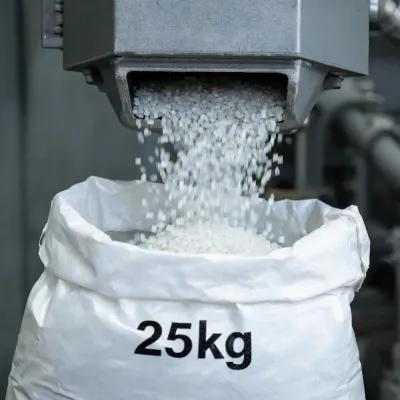
Freight can completely change the result. Resin pellets use container space efficiently in 25-kilogram bags or jumbo bags. Empty bottles, housewares and large-diameter pipes do not. Before signing the purchase order, discuss nesting, coil dimensions, pallet height and realistic container utilization. A slightly higher unit price may still produce the lower landed cost.
Packaging storage and arrival condition
Resin bags should be sealed, correctly marked and protected from moisture, puncture and sunlight. Confirm the net weight, number of bags per pallet, pallet material and wrapping method. Storage and container cleanliness need extra attention for food and medical applications.
Film rolls require edge protection, moisture barriers and secure palletization. Pipes need supports and a loading plan that prevents ovality, bending and abrasion. Finished goods should be packed to arrive in saleable condition, not simply well enough to survive customs inspection.
At destination, separate production lots and record batch numbers before material enters the warehouse or production line. Polymers should be kept away from heat, water and contamination, with the manufacturer’s drying instructions followed for hygroscopic materials.
Sustainability claims need evidence
Questions about recycled content, recyclability and carbon footprint are now part of many buying discussions. A green label or a recycled-looking colour is not proof of anything. Post-industrial regrind, post-consumer recyclate and virgin off-grade material have different origins and risk profiles.
If recycled content matters to your market, define its source, percentage, permitted variation, contamination limit, odour, colour and restricted-substance requirements. Also ask whether inks, adhesives or multilayer structures affect recyclability in the destination country. Environmental claims should be supported by traceable documents and test results.
Customs and responsible trade planning
HS Chapter 39 covers plastics and articles thereof, but the final tariff code depends on the polymer, primary form, shape, reinforcement and intended product.
>HS 3901 generally covers polymers of ethylene in primary forms. HS 3917 covers plastic pipes and fittings, HS 3920 certain non-cellular sheet, film, foil and strip, and HS 3923 packaging articles and closures. Confirm classification and tariff treatment with a qualified customs broker before shipment.
Iran-related transactions may also involve sanctions, banking, insurance and carrier restrictions. Buyers should screen the supplier, beneficial owners, banks, vessels, ports and transport route under the laws that apply to their own business. A product being permissible does not automatically make every counterparty or payment route permissible.
How IXPORT helps buyers turn an enquiry into a workable order
Most buyers do not struggle to find names online. The difficult part is deciding which company can genuinely produce the required grade or finished item, checking that capability and keeping documents and communication aligned throughout the order.
NEXUS B2B by IXPORT helps international buyers explore Iranian companies by industry and build a more relevant supplier shortlist. When a project needs local follow-up, Iran Gateway can support market research, supplier verification, factory inspection, business matchmaking, document control and coordination inside Iran.
The best way to begin is to send a proper buying brief. Tell us the product, application, polymer, standard, dimensions, trial or annual quantity, destination, required certificates, inspection expectations and preferred Incoterm. With that information, IXPORT can ask better questions on your behalf, and Iranian suppliers can respond with more than a generic price.
What should you do next
Are you buying resin for your own production line? Do you need a private-label product ready for distribution? Or are you searching for an Iranian manufacturer that can work from a drawing?
Your answer determines the right supplier, tests, contract and logistics plan. Share the target product and destination with IXPORT, and we can help turn a broad search for Iran plastics and plastic products into a sourcing process built around clear specifications, reliable evidence and commercial fit.
Sources and data notes
1. WITS and UN Comtrade Iran trade summary for 2023
2. UN Comtrade-based HS 39 export summary
3. UN Comtrade-based HS 39 import summary
4. WITS Iran exports of HDPE HS 390120 in 2023
5. WITS Iran exports of lower-density polyethylene HS 390110 in 2023
6. WITS Iran exports of plastic sheet film foil and strip HS 3920 in 2023
7. WITS Iran exports of plastic pipes and fittings HS 3917 in 2023
8. WITS Iran exports of packing articles HS 3923 in 2023
9. ASTM D4976 polyethylene materials
10. ASTM D4101 polypropylene materials
11. ISO 4427 polyethylene piping systems
12. EU Regulation No 10/2011 consolidated to 14 July 2026
Comments