

Iran Steel Pipes and Profiles from Specification to Shipment
Iran Steel Pipes and Profiles from Specification to Shipment
A square tube for a building frame, a precision tube for machinery and a pipe carrying pressurized fluid may look like variations of the same product. Their purchasing requirements are very different. Confusing them can leave a buyer with steel that meets the quoted dimensions but cannot be approved for its intended use.
For international companies exploring steel pipe suppliers in Iran, the opportunity starts with making that distinction well. Iran participates in both exports and imports of tubular products, and historical trade data reveal different patterns across product groups. This guide helps you identify the right family, interpret the statistics and prepare a specification that a manufacturer or distributor can answer meaningfully.
For a broader overview of the sector, explore our Iran iron and steel trade guide.
Start with the job the steel must perform
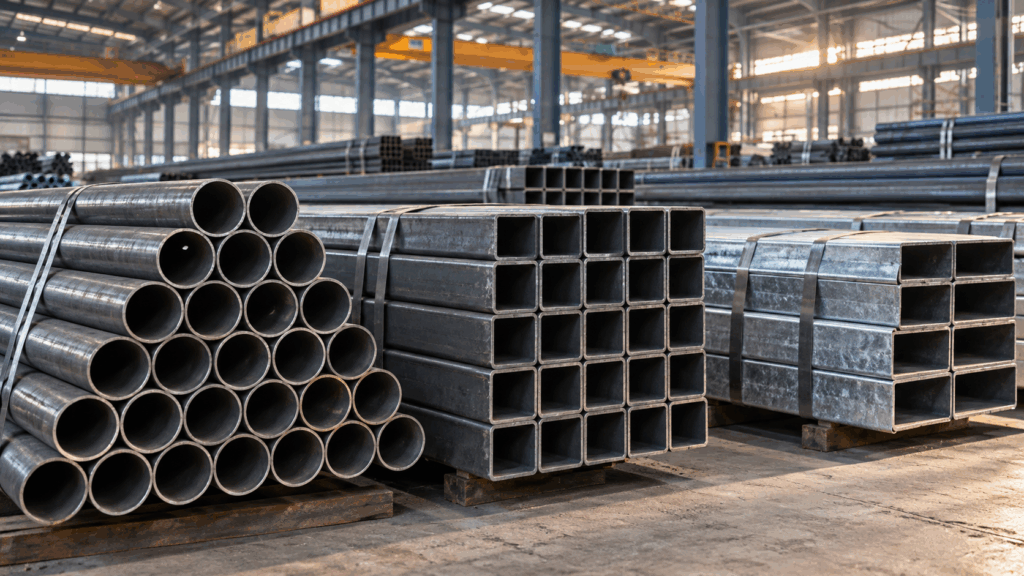
“Steel pipe and profile” covers several markets. Structural hollow sections support loads. Conveyance pipes carry fluids. Mechanical tubes become components. Open profiles serve framing and other fabrication requirements. A supplier may specialize in only part of this range.
| Product family | Typical purchasing focus |
| Circular hollow sections or CHS | Structural grade, outside diameter, wall and connection details |
| Square and rectangular hollow sections or SHS and RHS | Section dimensions, corner geometry, straightness and structural approval |
| Fluid conveyance and line pipe | Service conditions, pipe standard, testing and end preparation |
| Mechanical and precision tubing | Dimensional control, surface condition and processing requirements |
| Casing and tubing for wells | Specified grade, connections, performance requirements and traceability |
| Open profiles such as C and Z sections | Section drawing, material grade, holes, coating and design requirements |
Carbon steel, alloy steel and stainless steel introduce further choices. Black, galvanized, painted and specially coated products also need separate descriptions. A coating changes the surface system; it does not establish the strength grade or qualify a pipe for a particular service.
Which matters most in your inquiry: structural performance, fluid service, dimensional accuracy or resistance to a defined environment? Identify that first, before asking for a price per tonne.
Understand welded and seamless manufacturing routes
Welded tubular products are formed from strip or plate and joined along a seam. Electric resistance welding, commonly described as ERW, and arc welding are distinct processes. Arc-welded pipe can have a longitudinal or spiral seam. Seamless products are formed without a longitudinal welded seam. Nippon Steel’s manufacturing overview distinguishes these production routes. [1]
For more on the feedstock used in many welded tube applications, read our guide to hot-rolled steel coils in Iran.
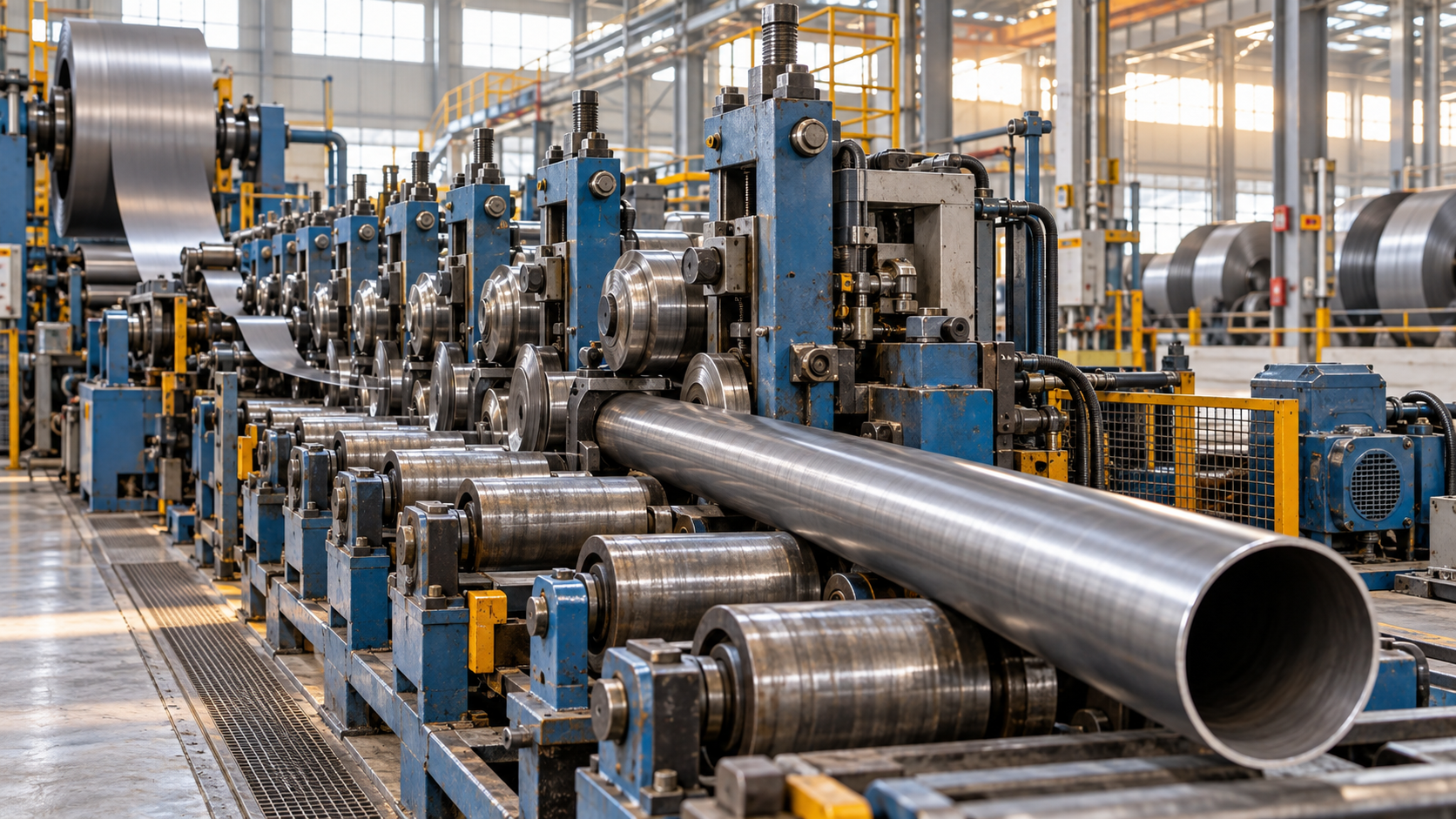
The manufacturing method must satisfy the specified application. “Seamless” alone does not prove suitability for high temperature, pressure or corrosion exposure. Equally, “welded” does not identify one uniform quality level. Grade, manufacturing controls, heat treatment and inspection requirements must be considered together.
Ask the supplier to state the actual production route and manufacturing location. If the seller sources from several mills, identify which facility will produce your order and whether substitution requires approval. This makes technical qualification more useful than a general company catalogue.
Use trade data that match the product
World Bank WITS provides Iran-reported UN Comtrade data for calendar year 2023. The selected categories below show why a single “Iran pipe market” figure can hide important differences. Values are in US$ thousand; quantities have been converted from kilograms to metric tonnes. [2–6]
| Product group and trade flow | Value in US$ thousand | Quantity in tonnes |
| HS 7306 exports | 142,125.35 | 214,696.00 |
| HS 7306 imports | 40,427.00 | 20,061.40 |
| HS 7304 seamless product imports | 295,825.49 | 181,728.00 |
| HS 7305 exports | 5,055.54 | 7,144.07 |
| HS 7305 imports | 7,406.09 | 5,800.34 |
HS 7306 is a broad category for other tubes, pipes and hollow profiles, including welded products. It is not a dedicated measure of square and rectangular structural sections. HS 7305 covers specified circular products with an outside diameter exceeding 406.4 mm; HS 7304 covers seamless tubular products. The displayed WITS data use HS 1988/92 nomenclature. [2–6]
For HS 7306 exports, Iraq accounted for US$77.993 million and Turkmenistan US$46.312 million, rounded to three decimals. Together, they represented approximately 87.46% of reported export value, calculated from the underlying figures. This shows a concentrated historical destination pattern, not guaranteed access to those markets today. [2]
The large seamless import figure is a reason for foreign suppliers to investigate specific demand. It does not reveal a current shortage, the precise grades purchased or available customers. These figures are a dated trade snapshot, not 2026 totals, current quotations or a complete total for every steel profile.
Keep structural standards separate from pipe service standards
For structural hollow sections, the full standard and grade belong on the inquiry. ASTM A500/A500M covers cold-formed welded and seamless carbon steel structural tubing in round and shaped sections. It should not be treated as a general pressure-pipe specification. [7]
European specifications also distinguish product routes. Tata Steel describes hot-finished hollow sections under EN 10210 and cold-formed hollow sections under EN 10219. Specify the relevant standard, grade, dimensions and delivery requirements together. Similar external dimensions do not make two products automatically interchangeable in a structural design. [8]
For carbon steel pipe intended for high-temperature service, ASTM A106/A106M is a different specification family. API 5L addresses line pipe, while API 5CT addresses casing and tubing. In a line pipe inquiry, identify the required product specification level, such as PSL 1 or PSL 2, along with grade, delivery condition and project requirements. [9, 10]
Have the responsible engineer define pressure, temperature, fluid characteristics and any special service conditions. Sour service, low-temperature duty or demanding fatigue performance can require additional provisions. A generic “industrial pipe” description leaves too much unresolved.
These international examples do not establish availability from every Iranian producer. Request written confirmation of the actual mill’s capability for the complete specification.
Treat open profiles as a separate purchasing category
C sections, Z purlins, channels and other open profiles require their own drawings and material requirements. SSAB’s product information, for example, identifies cold roll forming as a manufacturing route for C sections. [11]
For these products, include overall depth, flange and lip dimensions, thickness, bend radii, length and hole pattern. Confirm orientation and handed parts where relevant. A buyer ordering roof purlins should also establish which party supplies the design calculations and connection details.
Do not include open profiles in a tubular-product market total without checking classification. They may fall under different tariff headings, depending on material, form and processing. Their inclusion in a supplier’s “pipe and profile” catalogue does not make them part of HS 7306.
Specify dimensions that can be inspected
For circular products, state the outside diameter and wall thickness, or a complete recognized size designation. Nominal pipe size and schedule need to be interpreted together using the applicable dimensional standard. A schedule number on its own is not a wall thickness. ASME B36.10 provides a dimensional reference for welded and seamless wrought steel pipe. [12]
For RHS and SHS, state the outside dimensions, wall, length and required tolerances. Include corner geometry where it affects connections or fabrication. Agree limits for straightness, twist and end squareness rather than assuming that a nominal section size answers every fit-up question.
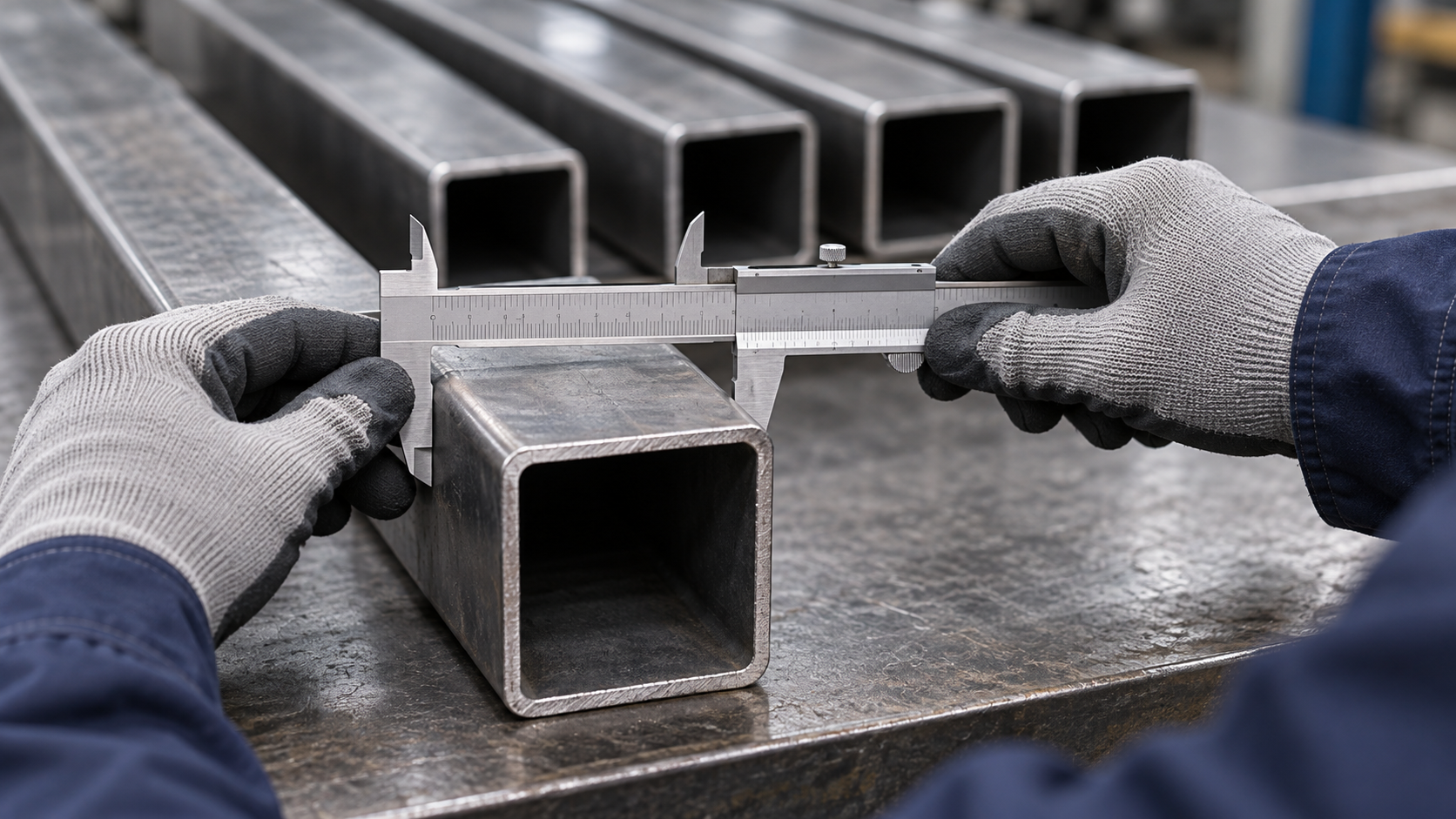
If tubes must telescope, be bent or pass through tooling, explain that operation before qualification. The inside weld bead, dimensional variation and surface condition may affect processing. Request samples representative of the intended production route and grade, with a defined trial and acceptance plan.
End preparation needs equal attention. State whether the order requires plain ends, bevels, threads, grooves or other agreed preparation. Identify mating components and inspection requirements where the connection is critical.
Compare cost per usable length
Price comparisons become more useful when the order has a consistent specification and mass basis. A tonne of thinner material provides more length, but that does not make it an acceptable substitute for the designed wall thickness.
For a hypothetical plain carbon steel tube with 60 mm outside diameter and 3 mm wall, the idealized cross-sectional area is approximately 537.21 mm². Using an assumed density of 7,850 kg/m³ gives about 4.217 kg per metre, or 25.30 kg for six metres. This calculation excludes coating and manufacturing deviations; it is not a product offer or acceptance standard.
Use the applicable standard and agreed measurement method for acceptance. Establish whether payment uses actual weighed mass or theoretical mass, and how length and thickness tolerances affect settlement. Compare equivalent grades, coatings, tests and end finishes.
Add freight, packaging, destination charges and any processing still required before installation. For mixed orders, ask whether all sizes can ship together. A low unit price offers limited benefit if missing sections delay fabrication.
Build an inspection plan around the intended use
Ask for certificates tied to the supplied heats and production lots. Reconcile markings, bundle labels, packing lists and test documentation before dispatch. Maintain identification when stock is cut or redistributed, particularly where the final customer requires traceability.
Specify the inspections required by the governing standard and project. Depending on the product, these may include dimensional checks, mechanical testing, weld examination, nondestructive testing or hydrostatic testing. They are not interchangeable, and every test is not automatically required for every tube. Agree methods, coverage and acceptance criteria in the order.
Where an API licence is relevant, verify the facility and scope through API’s official Composite List. API identifies this as its directory for licensees and registered organizations. A logo on a brochure is insufficient evidence of current, relevant licensing. [13]
For a first order, define independent inspection access and the procedure for disputed results before production. Photographs help document condition and packaging; they cannot establish material properties or pressure-service suitability.Need local support with supplier checks and inspection coordination? Explore Iran Gateway and discuss your requirements with IXPORT.
Make coating and delivery requirements explicit
Specify the protective system by an applicable standard or an agreed technical requirement. For galvanized products, clarify whether the proposed route uses coated feedstock or galvanizing after manufacture, and how weld areas, cut ends and internal surfaces are addressed. For painted or lined pipe, define preparation, coverage, inspection and permitted repairs.
Transport planning should reflect actual dimensions, bundle weights and unloading equipment. Long or large-diameter products may impose handling and vehicle constraints. Agree protection for threads and bevels, segregation of grades and a loading plan that avoids deformation or coating damage.
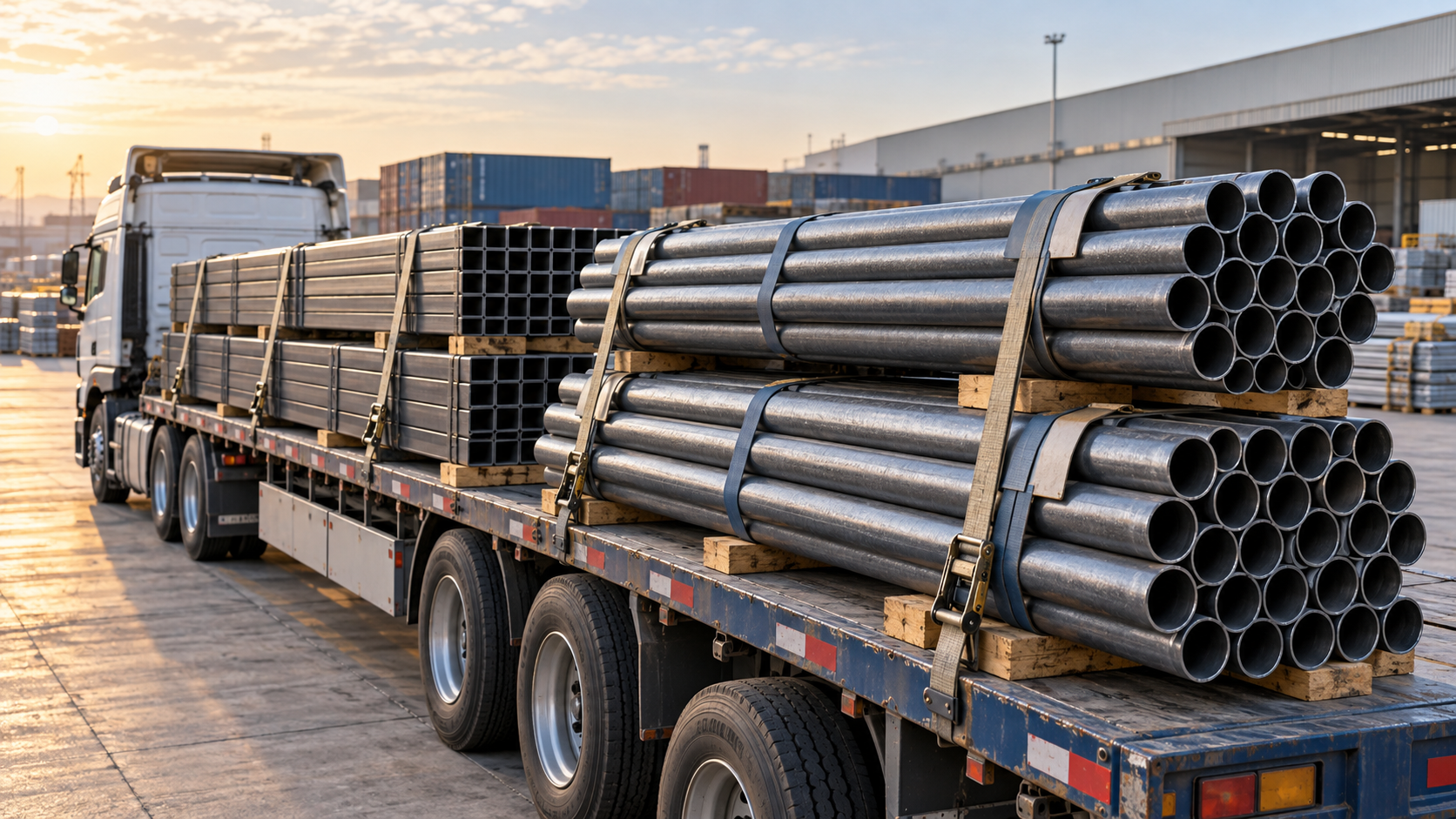
Identify the delivery point and applicable Incoterms edition. Allocate loading, customs tasks and insurance responsibilities, and confirm a realistic shipment window. Record shortages and damage at receipt using the agreed claims procedure.
Confirm the commercial route before committing
Have a customs specialist determine the current national tariff code for the actual goods. Historical HS groupings used for market analysis do not replace shipment classification. Confirm origin documentation, applicable duties, trade remedies and destination product approvals.
Trade involving Iranian steel also requires transaction-specific sanctions review. OFAC guidance identifies authorities covering Iran’s iron and steel sectors and certain significant transactions, with potential exposure for non-US businesses. Review counterparties and ownership, payment, banks, insurance and transport against applicable requirements before commitment. [14]
Confirm current Iranian export or import conditions and the practical acceptance of the shipment by the service providers involved. Incorporate responsibilities for approvals, inspection failures and inability to complete delivery into the contract.
Find partners who match your requirement
A structural tube producer, precision tube specialist and oilfield pipe distributor serve different buyers. IXPORT’s NEXUS B2B provides industry-organized Iranian company information, including a steel category, to support an initial shortlist. Confirm each candidate’s actual products, manufacturing role and relevant approvals as part of qualification. [15]
For foreign suppliers exploring Iran, Iran Gateway provides a Persian company presence and a route for business inquiries. Describe the specifications, processing capabilities and documentation you can supply so prospective Iranian partners can assess your offering. [16]
Tell IXPORT your application, destination, standard and grade, required sizes, quantities, surface condition and delivery window. Are you importing steel pipes from Iran, developing a recurring hollow-section supply programme or seeking Iranian customers for specialist tubing? Share that objective alongside your technical brief so the next conversation addresses a concrete commercial need.
Sources and data notes
[1] Nippon Steel, pipe and tube manufacturing processes.
[2] World Bank WITS, UN Comtrade, Iran HS 7306 exports, calendar 2023. Includes partner values and quantities.
[3] WITS, Iran HS 7306 imports, 2023.
[4] WITS, Iran HS 7304 imports, 2023.
[5] WITS, Iran HS 7305 exports, 2023.
[6] WITS, Iran HS 7305 imports, 2023.
[7] ASTM International, A500/A500M-23, public scope. Confirm the contractually applicable edition.
[8] Tata Steel UK, structural hollow sections and EN 10210 versus EN 10219 product routes.
[9] ASTM International, A106/A106M-19a, public scope for seamless carbon steel pipe for high-temperature service. Confirm the required edition.
[10] API, tubular goods standards overview and API 5L licensing scope.
[11] SSAB, Domex Sections and C section manufacturing.
[12] ASME, B36.10-2022, official contents for Welded and Seamless Wrought Steel Pipe.
[13] API, official directory and guidance on checking licensing status.
[14] US Treasury OFAC, FAQ 666, Executive Order 13871.
[15] IXPORT NEXUS B2B.
[16] IXPORT Iran Gateway.
Ready to discuss your requirements? Contact IXPORT with your product specifications, quantities and destination.
Comments