

Steel Sections from Iran: A Buyer’s Guide to Beams, Angles and Channels
Steel Sections from Iran: A Buyer’s Guide to Beams, Angles and Channels
Why these three profiles matter
Steel beams, angles and channels are the structural language of modern construction. They carry floors, brace industrial frames, support platforms, form transmission towers and connect machines to foundations. For an international buyer, the purchase is not simply a decision about price per tonne. It is a decision about section geometry, steel grade, mill capability, documentation, delivery reliability and the cost of making the material usable at the destination.
Iran has a deep steelmaking base, integrated mills and a strategic position between Central Asia, the Caucasus, the Gulf and South Asia. This guide explains how foreign contractors, stockists, fabricators and industrial buyers can evaluate Iranian structural sections, compare offers and build an import transaction that survives inspection and logistics. It also shows where IXPORT can help turn an open enquiry into a qualified commercial conversation. For a broader view of the industry, explore our Iran iron and steel trade guide.
Know the product family before requesting a quotation
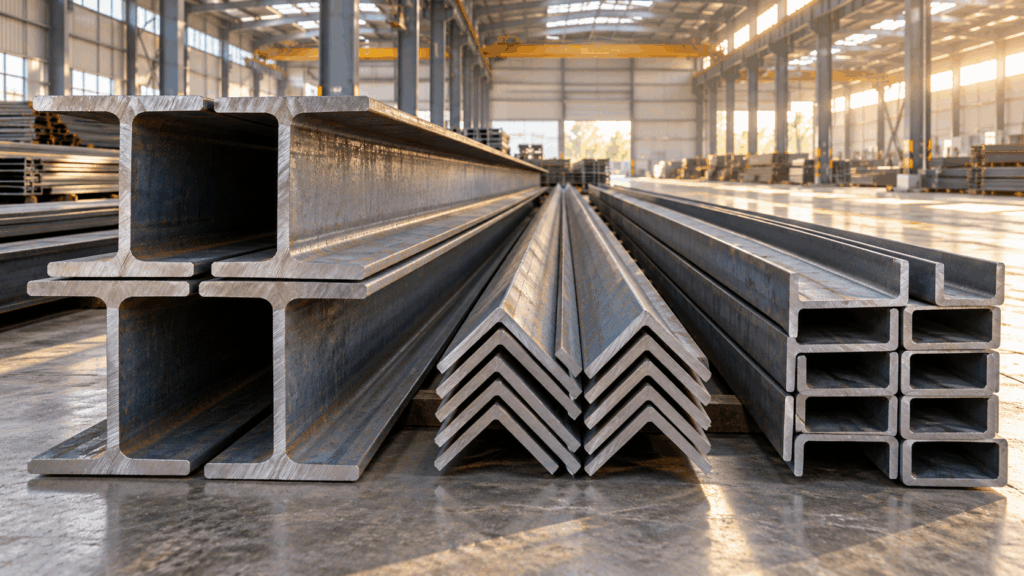
The HS 7216 family covers iron or non-alloy steel angles, shapes and sections. Commercial language is more specific:
| Product | Typical profiles | Common uses |
| Steel beam | IPE, IPN, HEA, HEB, HEM, W and UB sections | Buildings, warehouses, bridges, columns and industrial frames |
| Equal angle | L profiles with equal legs | Trusses, towers, racks, frames, supports and general fabrication |
| Unequal angle | L profiles with different leg lengths | Connections, edge members, platforms and engineered assemblies |
| U channel | UPN, UPE, C and MC profiles | Purlins, rails, frames, vehicle bodies and machine structures |
| Special section | Rails, T sections, Z sections and custom rolled shapes | Transport, energy and project-specific fabrication |
An I beam is not interchangeable with an H beam. The proportions of the flanges and web influence buckling resistance, connection design and available section properties. Likewise, a UPN channel with tapered flanges behaves differently from a UPE channel with parallel flanges. A credible quotation therefore starts with a standard, exact section designation, nominal length, grade and tolerances, not only the words “steel profile.”
Steel Sections from Iran: Production and Grades
Iranian producers supply hot-rolled sections from billet or bloom through reheating, roughing, universal or breakdown passes, finishing stands, straightening, cutting, inspection and bundling. The route is familiar to global buyers, but each mill has a different range. Some are optimized for light IPE beams and angles; others focus on heavy H sections, channels, rails or project sizes. To understand one of the upstream materials used in section rolling, read our guide to buying steel billets from Iran.
Common commercial grades include S235JR, S275JR and S355JR under the EN 10025 family, ASTM A36 and A572 grades for buyers using North American specifications, and locally designated grades that must be mapped to an accepted international standard. The grade name alone is not enough. Ask for the product specification, heat analysis, mechanical test results and a clear statement of equivalence.
For a project, section properties matter as much as yield strength. Request mass per metre, depth, flange width, web thickness, root radius, moment of inertia and section modulus when engineering approval depends on the profile. A lower-priced section with a different geometry may not be a true substitute.
What the latest trade data says
World Integrated Trade Solution and UN Comtrade data provide a useful market baseline. In 2023, global importers recorded the following purchases from Iran under HS 7216:
| Destination market | Trade value | Quantity | Approximate value per tonne |
| Iraq | US$82.269 million | 79,040 tonnes | US$1,041/t |
| Georgia | US$12.967 million | 19,383 tonnes | US$669/t |
| Uzbekistan | US$9.479 million | 14,464 tonnes | US$655/t |
| Azerbaijan | US$6.859 million | 9,691 tonnes | US$708/t |
| Armenia | US$6.100 million | 9,337 tonnes | US$653/t |
| Turkey | US$5.238 million | 10,051 tonnes | US$521/t |
These figures show both scale and geography. Nearby markets dominate because freight, border access and established commercial relationships can outweigh a small difference in the mill offer. The unit values are customs-value averages across mixed profiles, sizes and grades; they are not live prices and should never replace a product-specific quotation.
WITS also reports that Iran imported HS 7216 material from Turkey at US$14.852 million and from China at US$3.174 million in 2023. That two-way movement is a reminder that a buyer should examine the exact profile and delivery location rather than assume every size is available from a domestic mill.
The technical specification that prevents disputes
Send a structured enquiry with the following fields:
1. Product and profile: IPE 300, HEB 400, equal angle 75 x 75 x 8 mm, or UPN 200.
2. Standard: EN 10025-2, ASTM A36/A572, JIS G3192 or another project standard.
3. Grade and impact requirement: for example S355JR or S355J2 with Charpy testing at the specified temperature.
4. Length: standard six or twelve metres, or a project cut length.
5. Quantity: total tonnes, bundle target and any size-by-size breakdown.
6. Surface condition: hot rolled and mill descaled, shot blasted, primed or galvanized.
7. Tolerances: dimensional, straightness, mass and length tolerances required by the standard.
8. Documents: mill test certificate, certificate of origin, packing list, commercial invoice and inspection release.
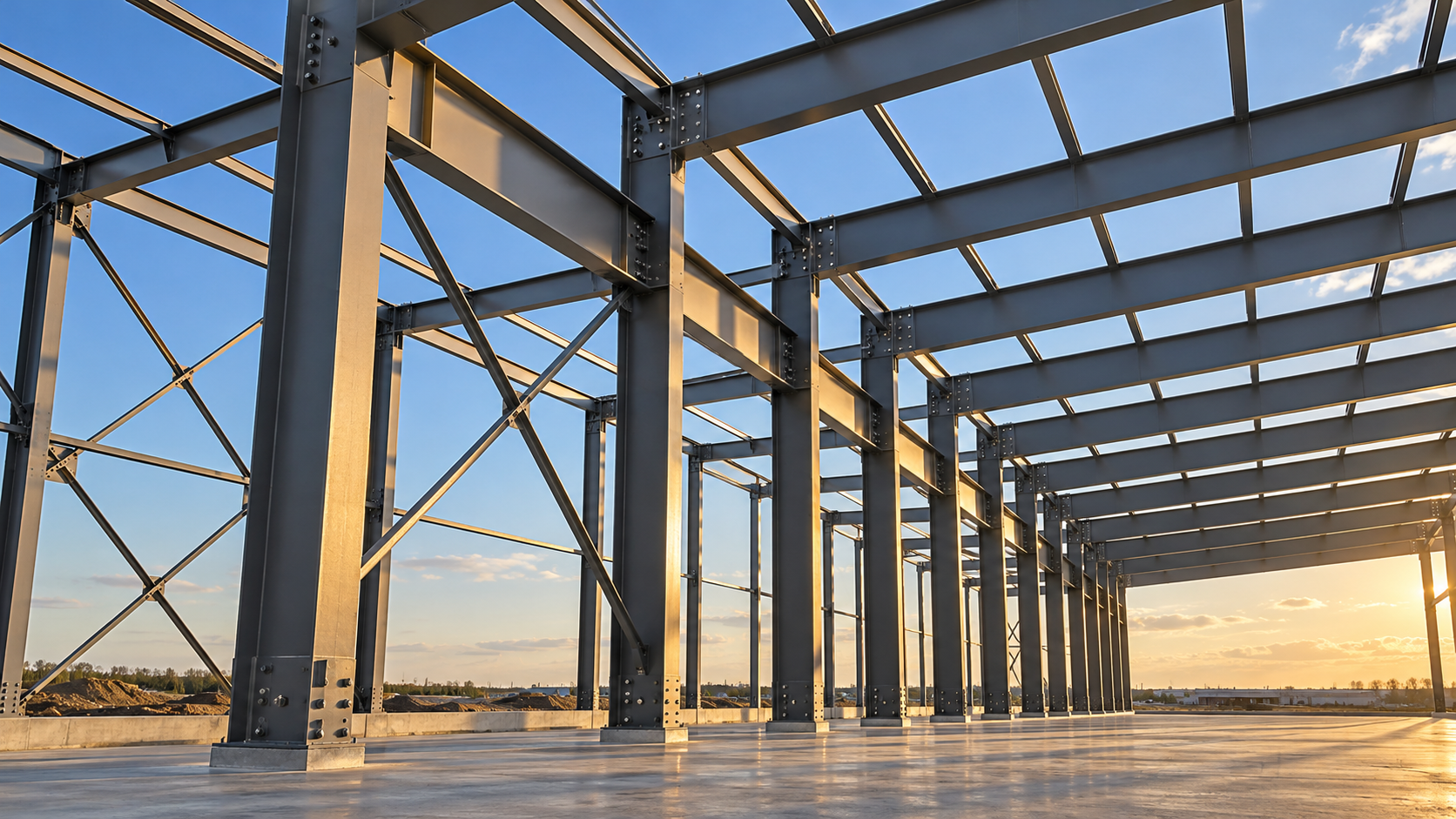
ASTM A6/A6M provides general requirements for rolled structural bars, plates and shapes, including chemical analysis, mechanical testing, marking and identification. EN 10025 is a multi-part European family covering hot-rolled structural steels, from general delivery conditions to non-alloy, fine-grain and weathering grades. If a project engineer has specified a national standard, obtain written acceptance before changing it.
Beams angles or channels Which should you buy
The correct choice depends on load path and fabrication:
• Beams are efficient for bending. IPE sections are economical for many secondary members, while HEA, HEB and HEM sections provide progressively heavier webs and flanges for columns and high-load frames.
• Angles are efficient in trusses, bracing and connections. Equal angles simplify symmetrical detailing; unequal angles can place material where the force actually acts.
• Channels are practical for edge members, frames, purlins, rails and equipment supports. They are easy to bolt and weld but may require paired channels or bracing against torsion.
For a stockist, mix matters. A container or truck carrying only one slow-moving size may tie up working capital. A balanced purchase list built around local construction demand can improve turnover even when the headline price is slightly higher.
Quality control from heat to bundle
An experienced buyer checks more than a mill certificate. Before loading, verify heat numbers on the bundle tags against the certificates, measure depth and flange width on a sampling plan, inspect cut ends for cracking and confirm straightness. Look for laminations, deep laps, heavy scale, corrosion pits and transport damage. If the material will be welded, pay attention to carbon equivalent and surface cleanliness.
Third-party inspection can include visual and dimensional inspection, chemical verification, tensile testing, impact testing, ultrasonic examination for critical applications and quantity reconciliation. Agree the inspection agency, sampling level and acceptance criteria in the purchase contract. Define how a nonconforming bundle is quarantined, replaced or credited.
Photographs are useful but cannot replace traceability. A strong document pack links the purchase order, heat, bundle, test results, packing list and shipping marks. For projects, keep one controlled digital dossier per size and heat.
Packing loading and shipping
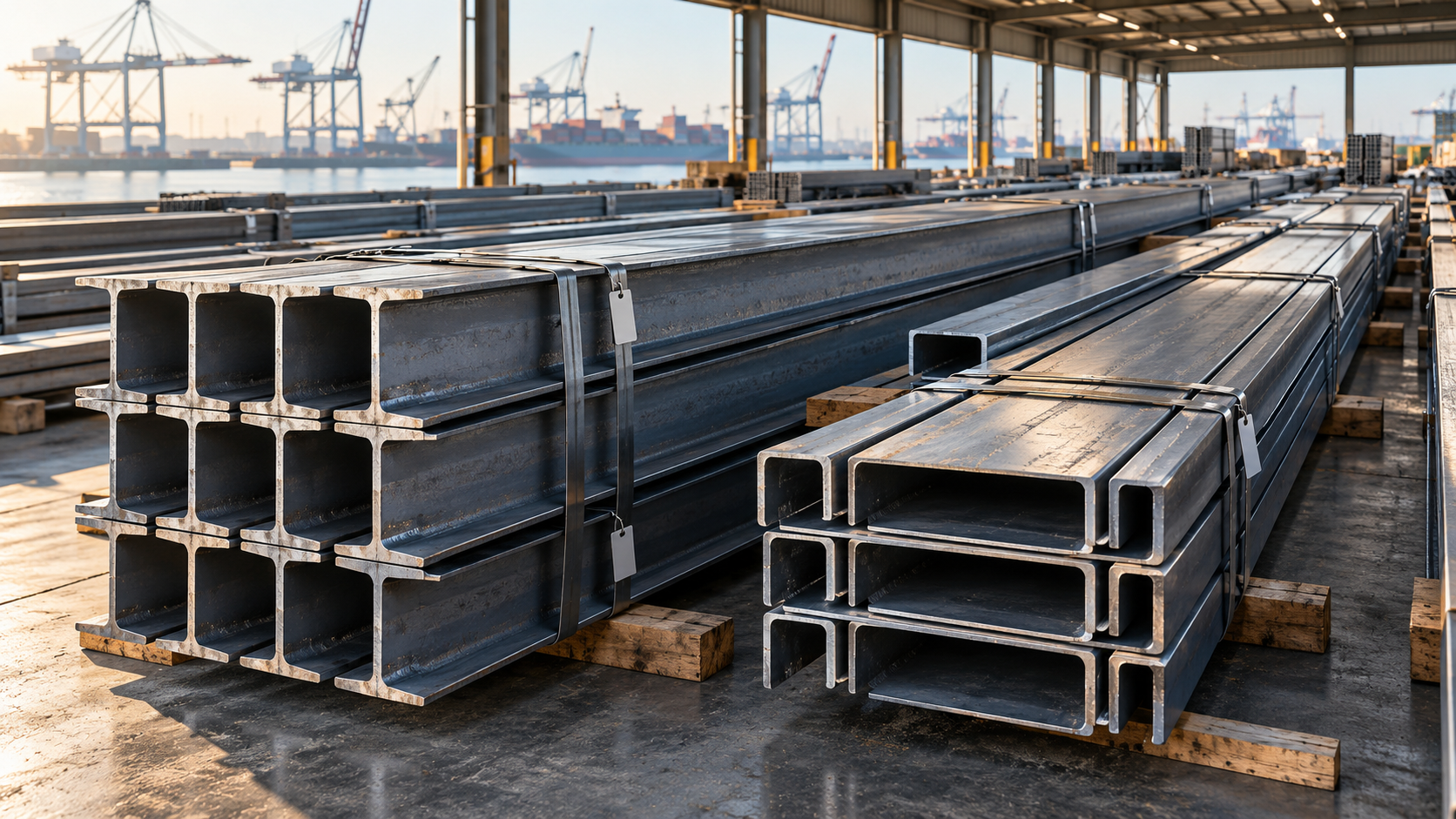
Structural sections are commonly supplied in strapped bundles with steel or wire bands, bundle tags and lifting points. Specify maximum bundle mass for your crane or forklift, tag position, protection against rainwater pooling and whether mixed lengths are permitted. Long beams need a loading plan that prevents overhang and distortion.
For containerized cargo, confirm internal length, payload, lashing points and port restrictions. Breakbulk or conventional vessel service may be more economical for heavy project quantities. Under the agreed Incoterm, state who pays export clearance, freight, insurance, destination charges and unloading. The quote should identify the loading port, estimated readiness date, transit assumptions and demurrage responsibility.
At destination, store sections on timber bearers above standing water. Separate bundles by heat and size. Avoid dragging profiles across the ground; it damages edges and removes traceability marks. If rust develops, distinguish superficial atmospheric oxidation from section loss or pitting before cleaning or rejecting the cargo.
Landed cost is more than the mill price
Compare offers on a delivered basis. Your model should include mill price, inland transport, export documentation, inspection, terminal handling, ocean or land freight, insurance, bank charges, duties, VAT, customs brokerage, financing cost, storage and expected cutting or straightening losses. A quote that is US$20 per tonne lower can become more expensive if it has a longer lead time, higher minimum order or incompatible bundle size.
Use a like-for-like comparison. If one supplier quotes S355J2 and another quotes S235JR, the numbers are not comparable, If one quotes theoretical mass and another bills actual scale weight, reconcile the basis. If one offer is for six-metre lengths and the other for twelve-metre lengths, include cutting, joints and waste.
Import compliance and responsible transaction planning
HS 7216 is an indicative classification for iron or non-alloy steel angles, shapes and sections, but the final tariff line depends on the product and importing country. Confirm classification, duties, safeguard measures, product conformity rules and labelling requirements with your customs broker.
Sanctions and banking restrictions can affect Iran-related transactions. Buyers should screen all parties, banks, vessels, insurers and routing arrangements against the rules applicable to their jurisdiction. OFAC guidance, local regulations and professional trade-compliance advice should be reviewed before committing funds. IXPORT can help clarify commercial information and supplier documentation; legal and sanctions decisions remain the buyer’s responsibility.
How IXPORT helps a foreign buyer move from interest to action
The hardest part of importing Iranian steel sections is often not finding a product name. It is finding a responsive supplier with the right rolling range, export experience, documents and commercial fit. IXPORT’S NEXUS B2B helps international buyers identify relevant Iranian companies and organize a focused shortlist instead of sending the same vague enquiry to the entire market.
For buyers who need local context, supplier communication, product verification or support in shaping an enquiry, the IXPORT’S IRAN GATEWAY provides a practical route into the Iranian market. A useful first message should include your destination, required profiles, grade, quantity, delivery window, inspection needs and preferred Incoterm. The clearer the brief, the faster a supplier can respond with a serious offer.
Start your steel section enquiry
If you are sourcing beams, angles or channels from Iran, begin with three questions:
• Which exact profiles and grades do you need, and what standard will your engineer accept?
• Do you want a one-off project shipment, a recurring stock programme or a qualified second source?
• What must be verified before payment: factory identity, production capability, test certificates, inspection or logistics?
Share those answers with IXPORT and request a supplier comparison built around your real application. A transparent process can turn a broad search for “Iran steel profiles” into a documented, commercially workable import decision.
Sources and data notes
1. WITS, Iran exports of HS 7216 in 2023
2. WITS, Iran imports of HS 7216 in 2023
3. ASTM A6/A6M general requirements
4. BSI EN 10025 series
5. OFAC Iran sanctions FAQs
6.IXPORT’S IRAN GATEWAY
7. IXPORT’S NEXUS B2B
Comments